Quick Comparison: Residential Proxies vs Managed Scraping
The clearest way to see the difference is by what you receive and what work remains. Proxies hand you an IP layer; managed scraping hands you the data.
| Factor | Residential Proxies | Managed Scraping |
|---|---|---|
| What you get | IP addresses to route through | Delivered, structured data |
| Scrapers | You build and run them | Included |
| Anti-bot beyond IP | Your responsibility | Included |
| Parsing and cleaning | Your team | Included |
| Maintenance | Your team | Included |
| Pricing metric | Per GB of bandwidth | Cost per record delivered |
| Best for | Teams building a pipeline | Teams that want data |
If you are new to how requests reach a page through this stack, see our explainer on what a web scraping API is.
What Residential Proxies Actually Do
Residential proxies route your traffic through IP addresses assigned to real households, so requests look like ordinary visitors rather than datacenter traffic. That helps with one specific defense: IP reputation. For many protected sources, proxies are necessary to get a response at all.
What proxies do not do is the rest of the job. They do not write your scrapers, parse the HTML into records, handle JavaScript challenges or fingerprinting, or fix extraction when a site changes. You still own all of that. Proxies are a component, not a solution, which is why buying them is the start of a pipeline rather than the end.
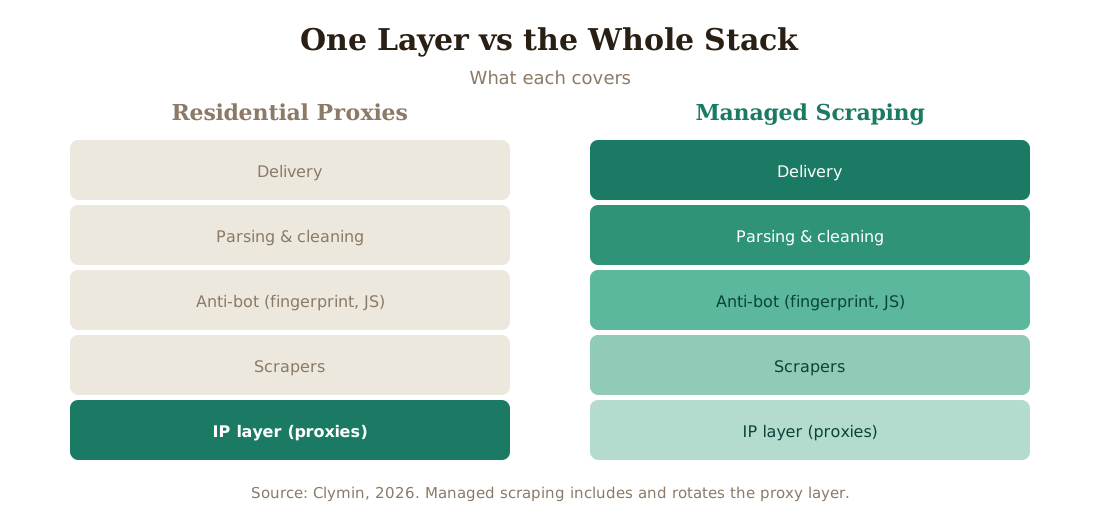 Residential proxies solve the IP layer; a managed service covers that layer plus parsing, other anti-bot defenses, maintenance, and delivery.
What Managed Scraping Delivers
Managed scraping delivers the finished dataset, not the parts. The provider supplies and rotates the proxy infrastructure, writes and maintains the scrapers, handles the full anti-bot stack, cleans the output, and delivers structured records on schedule. The IP layer that proxies provide is simply one included ingredient.
For the buyer, the difference is where the work lives. With proxies, the scraping problem stays on your team. With managed scraping, it moves to the provider. For the broader category, see what managed web scraping is, and for the related tool-versus-service decision, see web scraping API vs managed service.
Total Cost and Effort
Comparing a proxy bill to a managed fee is misleading, because they cover different scopes. Residential proxy bandwidth looks cheap per gigabyte, but the full cost of a proxy-based pipeline adds the engineering to build and maintain scrapers, parse output, and handle the anti-bot layers proxies do not.
Evidence that the hidden work dominates:
- According to Imperva's 2024 Bad Bot Report, automated traffic made up nearly half of all internet traffic in 2023, and sites defend with far more than IP checks, so proxies alone leave much of the problem unsolved.
- According to the 2023 Anaconda State of Data Science report, data professionals spend roughly a third of their time on data preparation and cleaning, work that a proxy does nothing to reduce.
- According to Cloudflare's 2024 analysis of internet traffic, a growing share of automated requests are engineered to mimic real browsers, so IP reputation alone catches fewer of them and the other defense layers carry more weight.
When parsing, anti-bot maintenance, and cleaning are included rather than billed in engineer-hours, managed scraping usually wins on total cost for continuous collection. For the build-versus-buy math, see managed web scraping versus building in-house.
When to Choose Each
Residential proxies make sense as a direct purchase when you already run a working scraper and only need better IP coverage, or when routing control (specific cities, carriers, or persistent sessions) is central to the use case. Teams that own their pipeline and just want a stronger IP layer are the natural buyers.
Choose managed scraping when the goal is the data, not the plumbing, when you lack a dedicated scraping team, or when handling every anti-bot layer and maintaining scrapers would pull engineers off higher-value work. For how proxies fit into the wider defense picture, see how to handle anti-bot systems when scraping.
How Clymin Fits In
Clymin includes the proxy layer inside a managed service, so you never buy bandwidth, rotate IPs, or maintain a proxy pool separately. Operating from offices in San Francisco and Hyderabad and serving customers across the United States, India, and globally, Clymin brings 12+ years on the hardest sources, 100 billion-plus records delivered, and 99.9% pipeline uptime, and delivers finished data rather than infrastructure.
The decision comes down to ownership. As of 2026, buy residential proxies when you want to assemble and run the pipeline yourself. Choose managed scraping when you want clean data delivered without managing any of it. See the approach on Clymin's main data extraction service.
Ready to Skip Managing Proxies?
If you want clean data without buying, rotating, or maintaining proxies and scrapers, Clymin will run a free pilot and deliver real records before you pay anything. Email contact@clymin.com or start a free pilot, one metric, cost per record delivered, no setup fees.