How a Web Scraping API Works
A web scraping API sits between your code and a target website. You send one request naming the URL and the fields you want; the API loads the page, runs the network plumbing, and returns the extracted data. The steps it handles for you are the parts that usually break.
A typical request-to-response cycle looks like this:
You send a request
Your application calls the API endpoint with a target URL, optional parameters (country, device type, whether to render JavaScript), and an API key.
The API routes through a proxy
The service picks a residential, datacenter, or mobile IP so the request looks like an ordinary visitor rather than a bot.
The page is fetched and rendered
For modern sites that build content with JavaScript, the API runs a headless browser so the full page exists before extraction.
Data is parsed and returned
The API extracts the requested fields and returns them as JSON, CSV, or raw HTML for your code to store.
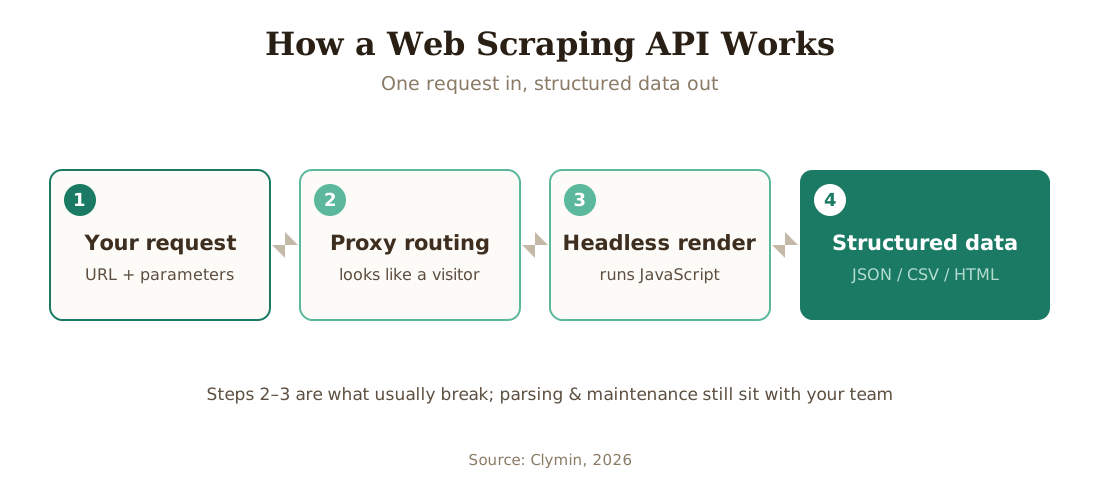 A web scraping API absorbs proxy routing and rendering, then returns structured data, but parsing and maintenance still sit with your team.
Web Scraping API vs a Normal API: What's the Difference?
A normal API is official infrastructure a company builds to share its own data through documented endpoints. A web scraping API is unofficial: it extracts data from a site's public pages when no official API exists, or the official one is rate-limited, incomplete, or expensive.
The distinction matters for reliability. A normal API changes on a published schedule with version notices. A web scraping API depends on a website's HTML, which can change without warning and silently break extraction. That fragility is why scraping is a moving target rather than a one-time integration. For the broader category, see our guide on what managed web scraping is.
Types of Web Scraping APIs
Not all scraping APIs do the same job. Three common types cover most use cases, and the right choice depends on how specialized your target is.
| Type | What it does | Best for |
|---|---|---|
| General-purpose | Fetches and renders any URL you pass | Broad, varied targets |
| Site-specific | Pre-built parsers for one platform (e.g., a marketplace) | Deep data from a single high-value site |
| SERP API | Returns structured search-engine results | Rank tracking, keyword research |
General-purpose APIs give flexibility but leave parsing to you. Site-specific APIs return clean, structured fields for one platform but cover only that platform. Most teams end up combining several, which multiplies the integration and maintenance work.
What Are the Limits of a Web Scraping API?
A web scraping API removes infrastructure work, but it does not remove all the work. Buyers consistently underestimate three recurring costs that the list price hides.
The hidden work that remains on your team:
- Parsing and validation. General-purpose APIs return raw HTML; turning that into clean, structured records is still your job.
- Anti-bot escalation. According to Imperva's 2024 Bad Bot Report, automated traffic made up nearly half of all internet traffic in 2023, and sites have responded with tougher defenses that cause request failures.
- Maintenance when sites change. Industry surveys such as the 2023 Anaconda State of Data Science report find data professionals spend roughly a third of their time on data preparation and cleanup rather than analysis.
When pages change, the API returns broken or empty data and the fix lands back on your engineers. That is the gap a managed service is built to close.
Web Scraping API vs Managed Service: When to Use Each
Choose a web scraping API when scraping is a core skill you want to own, you have engineers to parse and maintain pipelines, and you need granular control over individual requests. The API gives you building blocks and you assemble the rest.
Choose a managed service like Clymin when the goal is the data, not the plumbing. With the managed model you define the sources, fields, frequency, and delivery format, and you receive clean records on schedule. Setup, anti-bot, maintenance, and cleansing are included under one metric: cost per record delivered. For a side-by-side on the underlying trade-off, see web scraping versus API for collecting data.
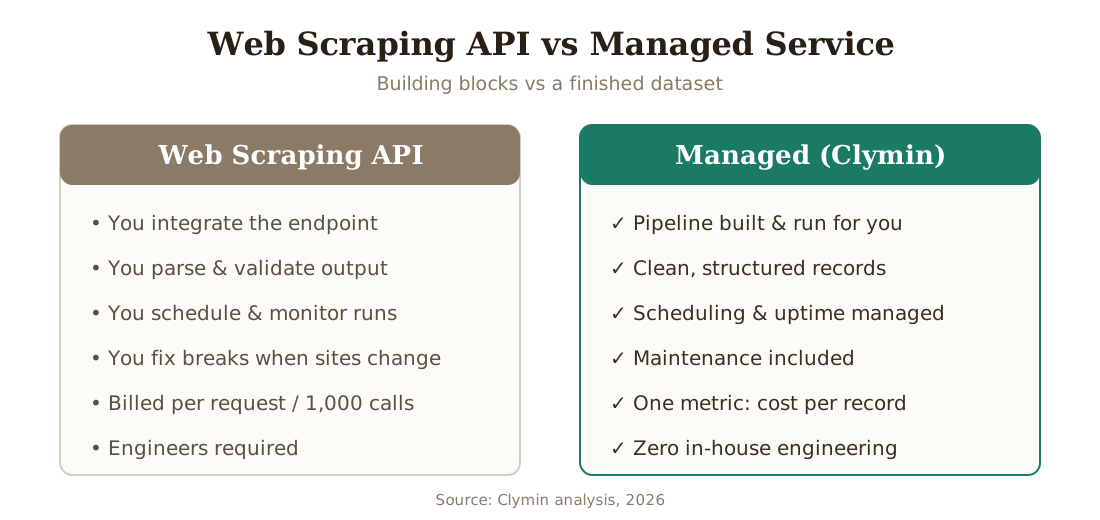 An API hands you parts to assemble and maintain; a managed service hands you the finished, structured dataset.
How Clymin Fits In
Clymin is a managed data extraction service operating from offices in San Francisco and Hyderabad, serving customers across the United States, India, and globally. Rather than selling an API you operate, Clymin builds, runs, and maintains the entire pipeline and delivers the output, with 12+ years of experience on the hardest sources, including aggressive anti-bot systems and mobile apps.
The practical decision is simple. As of 2026, a web scraping API is the right tool when you want to assemble and own the pipeline. When you want clean data delivered on time without managing anything, the managed model removes the work entirely. See how that approach works on Clymin's main data extraction service.
Ready to Skip the Pipeline?
If you want structured data without building or maintaining an API integration, Clymin will run a free pilot on your sources and deliver real records before you pay anything. Email contact@clymin.com or start a free pilot, one metric, cost per record delivered, no setup fees.