
Why Scraping Zillow Data Manually Fails at Scale
Zillow hosts over 135 million property records across the United States, making manual data collection impractical for any serious market analysis. Data analysts who attempt DIY Zillow scraping encounter three persistent obstacles in 2026.
Zillow updates its front-end architecture every two to three weeks. According to Statista's 2025 real estate technology report, Zillow receives approximately 230 million unique monthly visitors, which drives aggressive anti-bot protections including CAPTCHAs, IP rate limiting, and JavaScript rendering requirements. Each platform update breaks custom scripts, creating data gaps that compromise downstream analysis.
Building internal Zillow scrapers also carries significant engineering cost. A 2025 analysis by Oxylabs estimated that maintaining production-grade web scrapers costs between $300,000 and $600,000 annually when accounting for developer time, infrastructure, and ongoing maintenance. For most real estate teams, dedicating engineering resources to scraper maintenance diverts talent from core analytics work.
What Zillow Data Fields Clymin Extracts
Clymin's Zillow listing extraction covers every publicly available data point on the platform. Real estate data analysts receive structured datasets tailored to their specific analytical models.
Property fundamentals: Address, listing price, property type, bedrooms, bathrooms, square footage, lot size, year built, HOA fees, parking, and listing status (active, pending, sold, price-reduced). Clymin normalizes all fields into consistent formats regardless of how Zillow displays them.
Valuation data: Zestimates, Rent Zestimates, assessed tax values, and valuation change history. Tracking Zestimate fluctuations over time reveals market momentum before traditional indicators catch up. Clymin captures historical valuation snapshots at your chosen frequency, daily, weekly, or monthly.
Market activity signals: Days on market, price change history, listing and delisting dates, view counts (where available), and saved-home counts. These behavioral signals help analysts identify demand patterns across zip codes and property types.
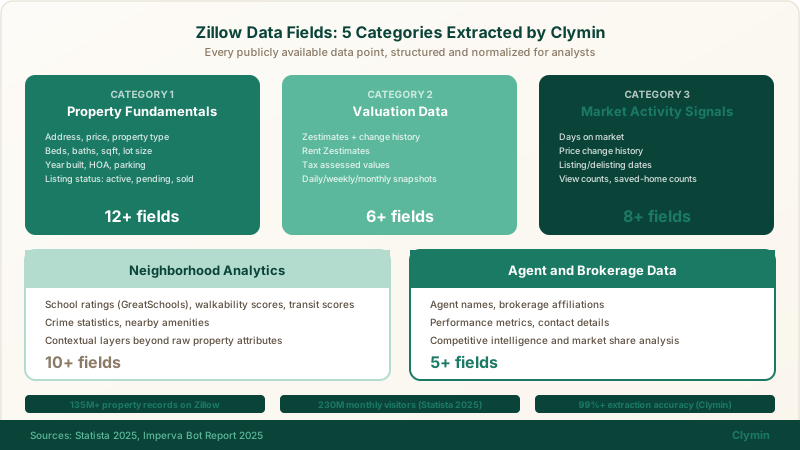
Neighborhood analytics: School ratings, walkability scores, transit scores, crime statistics, and nearby amenities. Clymin pulls neighborhood data that Zillow aggregates from GreatSchools, Walk Score, and local municipal sources, giving analysts contextual layers beyond raw property attributes.
Agent and brokerage data: Listing agent names, brokerage affiliations, agent performance metrics, and contact details from public profiles. Useful for competitive intelligence and market share analysis across territories.
How Clymin's Zillow Scraping Outperforms DIY Solutions
Clymin's managed approach to Zillow data scraping eliminates the technical burden that stalls most in-house extraction projects. Rather than detailing the full process here, you can review how Clymin's AI-agentic scraping works on the main service page. The key advantages for Zillow-specific extraction deserve closer examination.
Adaptive rendering handles Zillow's JavaScript-heavy pages. Zillow serves significant portions of property data through client-side JavaScript rendering. According to Imperva's 2025 Bot Management Report, over 47% of all internet traffic now comes from bots, prompting platforms like Zillow to implement increasingly sophisticated detection mechanisms. Clymin's AI agents execute full browser rendering and adapt to detection changes automatically, maintaining 99%+ extraction accuracy without manual intervention.
Cross-referencing validates Zillow data against other sources. Zillow's data occasionally contains stale listings, incorrect square footage, or outdated tax records. Clymin cross-references Zillow records with county assessor databases, Realtor.com listings, and Redfin data to flag discrepancies. Explore how these platforms compare in our Zillow vs Realtor.com scraping analysis.
Emily W., a Real Estate Consultant working with Clymin, reported that data collection efficiency improved by 35% with automated property listing extraction. That efficiency gain compounds when analysts spend time on modeling rather than data wrangling.
Zillow Scraping Use Cases for Real Estate Analysts
Real estate data analysts leverage Zillow scraping for distinct analytical workflows, each requiring different data configurations and refresh frequencies.
Automated valuation models (AVMs): Proptech companies building AVM products need Zestimates, tax assessments, comparable sales, and property attributes across target markets. According to the National Association of Realtors' 2025 Technology Survey, 72% of homebuyers used online valuation tools during their search. Clymin delivers the training data that powers these models with daily refresh cycles.
Portfolio monitoring: Investment firms tracking residential portfolios use Clymin's Zillow extraction to monitor Zestimate changes, nearby comparable activity, and rental yield shifts across holdings. Structured data arrives via API or cloud storage (S3, GCS) for direct pipeline integration.
Market entry analysis: Developers and investors evaluating new markets need listing inventory, price distributions, days-on-market trends, and absorption rates at the zip-code level. Clymin's nationwide Zillow extraction covers every US metro without requiring separate configurations per market.
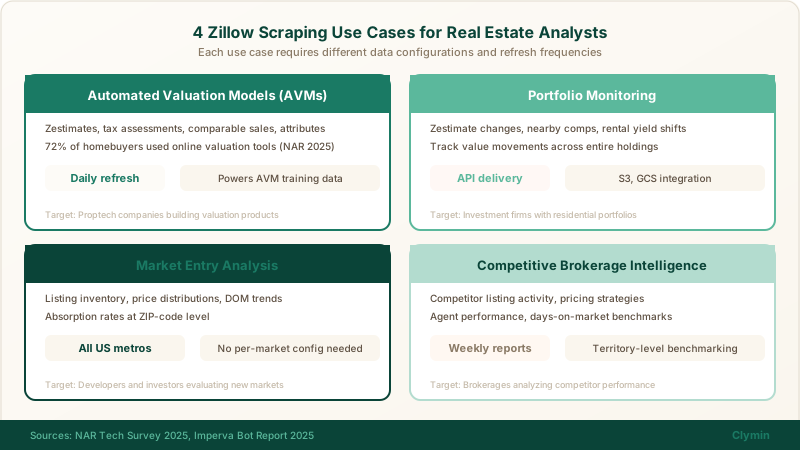
Competitive brokerage intelligence: Brokerages analyzing competitor listing activity, pricing strategies, and agent performance across territories gain a strategic edge. Combine Zillow agent data with listing outcomes to benchmark performance across your operating markets.
For analysts who need property data from multiple platforms beyond Zillow, Clymin also offers multi-site property listing extraction that consolidates data from 30+ real estate sources into a single normalized dataset.
Data Delivery and Compliance Standards
Clymin delivers Zillow datasets in the format your analytics stack requires. Structured outputs include JSON, CSV, XML, and direct database integration via REST API or cloud storage drops to Amazon S3 or Google Cloud Storage. Every delivery includes data quality metadata, extraction timestamps, field completeness scores, and validation flags.
Compliance underpins every Clymin engagement. The company holds ISO 27001 certification, maintains AICPA SOC compliance, and operates within GDPR frameworks. Zillow data extraction follows responsible practices: rate-limited requests, robots.txt adherence, and strictly public-data-only collection. With 40+ customers trusting Clymin across more than a decade of operation, security and legal compliance are foundational, not afterthoughts.
For analysts comparing web scraping with official MLS feeds, our MLS data vs web scraping comparison breaks down coverage, freshness, and cost differences to help you choose the right approach.
Start Extracting Zillow Data This Week
Clymin deploys Zillow scraping pipelines within 5-7 business days, no engineering resources required from your team. Contact Clymin at contact@clymin.com to scope your Zillow data requirements, or schedule a free consultation to discuss market coverage, delivery formats, and pricing. With hundreds of completed projects and 100B+ data points extracted, Clymin delivers the Zillow data your analysis demands.