
What Is Product Data Extraction? Methods, Use Cases & Benefits in 2026
Why Product Data Extraction Matters
The ecommerce landscape in 2026 is more competitive than ever. Retailers, brands, and analysts need real-time access to product data across hundreds of sources to make informed decisions. Manual data collection simply cannot keep up with the volume and velocity of online product catalogs.
Data extraction for products enables businesses to automate this work. Instead of copying and pasting information from competitor sites, teams can access clean, structured datasets delivered on schedule. This shifts the focus from data gathering to data-driven strategy.
How Product Data Extraction Works
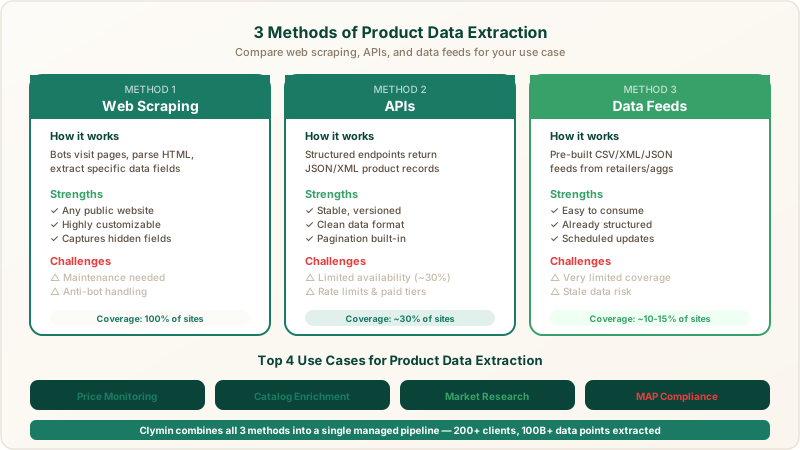
At its core, the process involves three steps: identifying the target data sources, collecting the raw information, and transforming it into a structured format. The specifics depend on the extraction method used. Below are the three most common approaches.
Web Scraping
Web scraping uses automated bots to visit web pages, parse the HTML, and extract specific data fields. It is the most flexible method because it can target virtually any public website, regardless of whether that site offers an official data feed.
Pros: Works on nearly any website; highly customizable; can capture data that APIs do not expose.
Cons: Requires ongoing maintenance as site layouts change; may be blocked by anti-bot measures; needs careful handling to respect rate limits and terms of service.
For a deeper comparison of approaches, see our guide on web scraping vs API for product data.
APIs (Application Programming Interfaces)
Some platforms provide official APIs that let developers request product data in a structured format. Marketplaces like Amazon, eBay, and Shopify offer API endpoints for retrieving product listings, inventory, and pricing.
Pros: Reliable and stable data format; less likely to break unexpectedly; often includes pagination and filtering options.
Cons: Limited to what the platform exposes; may impose strict rate limits or require paid access; not available on all websites.
Data Feeds and Aggregators
Retailers and distributors sometimes publish product data feeds in formats like XML, CSV, or JSON. Affiliate networks and data aggregators also compile product information from multiple sources into unified feeds.
Pros: Easy to consume; already structured; often updated on a set schedule.
Cons: Limited coverage; data freshness varies; may not include all the fields a business needs.
Common Use Cases
Product data extraction serves a wide range of business functions. Here are the most impactful applications.
Competitive Price Monitoring
Tracking competitor prices across marketplaces helps retailers adjust their own pricing strategies. Automated extraction makes it possible to monitor thousands of SKUs daily without manual effort. Learn how this works in practice with our ecommerce price scraping service.
Product Catalog Enrichment
Manufacturers and distributors use extraction to fill gaps in their own product databases. Pulling specifications, images, and descriptions from supplier sites ensures that catalogs remain accurate and complete.
Market Research and Trend Analysis
Business analysts use extracted product data to identify emerging trends, track category growth, and benchmark product assortments. This is especially valuable for investment research and market entry planning.
MAP and Reseller Compliance
Brands extract pricing data from reseller websites to verify compliance with Minimum Advertised Price (MAP) policies. Automated monitoring flags violations faster than manual spot checks.
Challenges in Product Data Extraction
While the benefits are clear, extraction is not without obstacles. Understanding these challenges is essential for any team evaluating a data extraction strategy.
Anti-Bot Protections: Many websites deploy CAPTCHAs, IP blocking, and JavaScript rendering to prevent automated access. Overcoming these requires rotating proxies, headless browsers, and sophisticated request management.
Data Quality and Consistency: Raw extracted data is often messy. Product names, categories, and attributes vary across sources. Cleaning and normalizing this data is a critical post-extraction step.
Scale and Maintenance: A scraper that works today may break tomorrow when a website updates its layout. Maintaining extraction pipelines at scale demands dedicated engineering resources.
How Clymin Solves These Challenges
Rather than building and maintaining extraction infrastructure in-house, many businesses choose a managed approach. Clymin provides end-to-end product data extraction services that handle source identification, data collection, cleaning, and delivery.
With 40+ customers served, hundreds of completed projects, and more than 100 billion data points processed across over a decade of operations, Clymin brings proven expertise to every engagement. Our clients focus on analysis and decision-making while we handle the engineering complexity.
As one client put it: "Clymin's data insights helped us boost revenue by 20%...", Sarah T.
Getting Started
If you are evaluating product data extraction for your business, start by defining the specific data points you need and the sources you want to target. Consider whether your team has the technical capacity to build and maintain scrapers, or whether a managed service would deliver faster time to value.
Ready to explore what structured product data can do for your organization? Get a Free Consultation with our team to discuss your requirements.