
Web Scraping for Dropshipping Product Research: How to Find Winning Products in 2026
Why Manual Product Research Fails in 2026
Browsing marketplaces by hand worked when dropshipping was a niche business model. Today, millions of sellers compete for the same products, and trends emerge and fade within weeks. A Statista report projects global ecommerce revenue will exceed $6.5 trillion in 2026, intensifying the race to find untapped products before competitors do.
Manual research also introduces bias. Entrepreneurs gravitate toward products they already know, missing entire categories where demand outpaces supply. Automated scraping removes that blind spot by scanning entire catalogs systematically.
Five Ways Dropshippers Use Web Scraping for Product Discovery
1. Trending Product Identification
Scraping best-seller lists, "hot products" sections, and wish-list counts across AliExpress and Amazon reveals what buyers are actively purchasing. By tracking these signals daily, dropshippers can spot upward momentum before a product saturates the market.
Pairing marketplace data with Google Trends and social media scraping creates a multi-signal validation system. Products trending across multiple channels carry far less risk than those spiking on a single platform.
2. Supplier Pricing Comparison
A dropshipping product finder built on web scraping can pull pricing from dozens of suppliers simultaneously. Compare unit costs, minimum order quantities, shipping fees, and delivery timelines side by side to maximize your margin on every product.
Even small pricing differences compound at scale. A $0.50 per-unit advantage across 500 monthly orders translates to $3,000 in annual savings, money that funds advertising or additional product launches.
3. Demand Validation Through Review Analysis
Review volume and sentiment serve as proxies for real-world demand. Scraping review counts, star ratings, and recurring complaint themes from Amazon and AliExpress helps you gauge whether a product has genuine staying power or is a fleeting fad.
According to Bazaarvoice research, over 80% of online shoppers consult reviews before purchasing. Products with high review velocity and positive sentiment are safer bets for your dropshipping catalog.
4. Niche Identification and Gap Analysis
Scrape products for dropshipping research by collecting category-level data across competing stores. When you map product density against demand signals, underserved niches become visible. Categories with high search volume but limited competition represent prime opportunities.
For a deeper understanding of how product data extraction works across ecommerce platforms, see our guide on what product data extraction involves.
5. Competitor Store Monitoring
Scraping competitor Shopify stores, WooCommerce sites, and marketplace seller pages reveals their best-sellers, pricing strategies, and product launch cadence. Understanding what top sellers stock, and at what margins, helps you make smarter sourcing decisions.
Building Your Dropshipping Product Research Pipeline
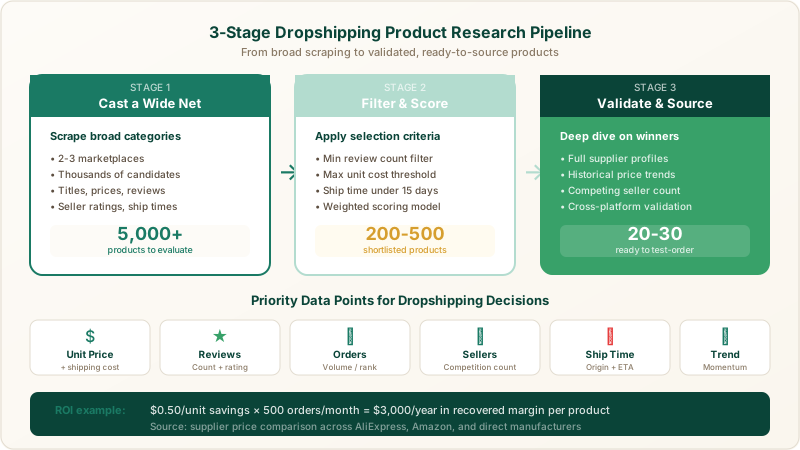
A structured approach to scraping for dropshipping product research typically follows three stages.
Stage 1: Cast a Wide Net. Scrape broad categories across two or three marketplaces. Collect product titles, prices, review counts, seller ratings, and shipping times. Volume matters here because you want thousands of candidate products to filter.
Stage 2: Filter and Score. Apply criteria to narrow the list. Common filters include minimum review count (indicating proven demand), maximum unit cost (protecting margins), and shipping time under 15 days. Score remaining products by a weighted combination of demand, margin potential, and competition level.
Stage 3: Validate and Source. For your top 20-30 products, scrape deeper. Pull full supplier profiles, historical pricing trends, and competing seller counts. Cross-reference with product data extraction services to ensure your data is comprehensive and accurate before placing test orders.
Why Managed Scraping Outperforms DIY Tools for Dropshipping
Free scraping tools and browser extensions seem appealing, but they break frequently. Marketplace platforms update their page structures, deploy anti-bot measures, and throttle automated requests. A ScrapeOps industry survey found that maintaining scrapers consumes more engineering time than building them.
Clymin's AI-agentic scraping approach eliminates this maintenance burden entirely. Adaptive agents detect and respond to site changes automatically, delivering clean data on schedule without manual intervention. With over a decade of experience and over 100 billion data points extracted, Clymin handles the complexity so you can focus on selecting products and scaling sales.
For entrepreneurs who also need ongoing price tracking after product selection, our ecommerce price scraping service provides continuous monitoring across supplier and competitor storefronts.
Choosing the Right Data Points to Scrape
Not all product data carries equal weight for dropshipping decisions. Prioritize these fields in your scraping setup:
- Product title and category for keyword research and SEO planning
- Unit price and shipping cost for margin calculation
- Review count and average rating for demand validation
- Seller count to assess competition density on a given listing
- Order volume or sales rank as a direct demand indicator
- Shipping origin and delivery estimate to evaluate fulfillment speed
Collecting these fields consistently across marketplaces gives you a standardized dataset for comparison. Clymin delivers data in structured formats like CSV, JSON, or direct API feeds, ready for analysis in spreadsheets or business intelligence tools.
Start Finding Winning Products With Data
Dropshipping success in 2026 belongs to entrepreneurs who make product decisions backed by data, not guesswork. Web scraping for dropshipping product research gives you the competitive intelligence to identify trends early, source at better prices, and validate demand before investing in inventory or advertising.
Ready to automate your product research pipeline? Get a Free Consultation with the Clymin team and discover how managed web scraping can accelerate your dropshipping business.