
Why Retail Price Metrics Matter in 2026
Price is the most visible and fastest-moving lever in retail, and competitors change it constantly. According to McKinsey's pricing research (2023), a 1% improvement in realized price can raise operating profit by around 8% for the average company, yet most teams still track price in spreadsheets that go stale within hours. The metrics below convert continuous price data into a scoreboard category managers can act on.
The shift online raises the stakes further. According to the U.S. Census Bureau, e-commerce reached roughly 16% of total U.S. retail sales by 2024, so price competition increasingly plays out across marketplaces and apps where prices change by the hour. The hard part is rarely the math; it is getting accurate, current data across every competitor and SKU. The metrics that follow each depend on a reliable feed of competitor prices, promotions, and availability, which is the data layer Clymin delivers.
The 7 Retail Price Metrics to Track
Each metric answers a specific question about competitiveness. Track them together, because any one in isolation can mislead.
1. Price index versus competitors. Your price as a ratio of a competitor's, with the rival set to 100. It is the core metric for spotting where you are over- or under-priced across the assortment.
2. Price change frequency. How often competitors reprice each SKU. Rising frequency signals algorithmic repricing and tells you how fresh your own data needs to be.
3. MAP compliance rate. The share of listings advertised at or above your minimum advertised price. For brands, it protects margin and channel health; see web scraping for MAP pricing compliance.
4. Promotion depth and frequency. How deep competitor discounts run and how often they appear. Tracking this reveals promotional patterns so you can time offers instead of reacting late.
5. Price gap by category. The average price difference between you and competitors, rolled up by category rather than SKU. It shows where a whole category is mispriced versus the market.
6. Availability-adjusted price. Price weighted by whether the item is actually in stock. A low competitor price on an out-of-stock item is not real competition, and this metric removes that noise.
7. Share of the winning price (buy box). The percentage of products where your offer wins the default purchase placement. It blends price, availability, and rating into one competitiveness signal.
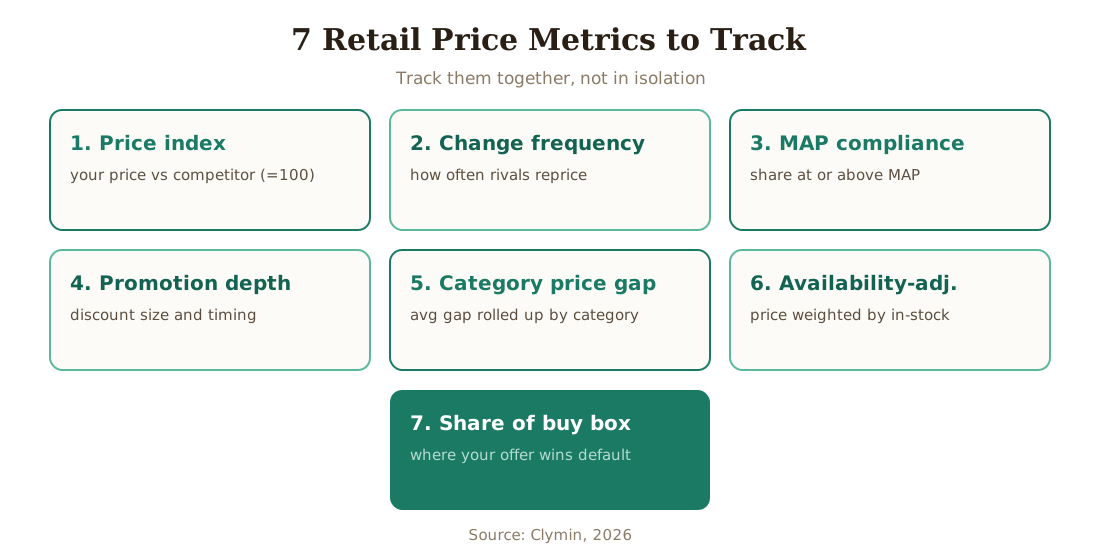 The seven metrics work together: price index and gaps show position, while MAP, promotions, and buy box show why.
How to Measure These Metrics at Scale
Measuring these metrics across a real assortment means extracting competitor prices, promotions, and availability continuously, then structuring them for comparison. Manual collection cannot keep pace with daily repricing across thousands of SKUs and many competitors.
A managed pipeline solves the data problem so analysts spend time on decisions, not collection. Clymin delivers the underlying records, which feed tools like competitor price monitoring and broader price intelligence services. For the full online-visibility picture, these price metrics pair with digital shelf analytics.
How to Act on Retail Price Metrics
Metrics only matter if they drive a decision. The practical pattern is to set thresholds and let the data trigger action rather than reviewing dashboards by hand. A price index above a set ceiling flags SKUs to consider repricing; a MAP compliance rate that drops triggers enforcement; a competitor promotion of a given depth prompts a planned response.
Prioritize by impact, not volume. The SKUs that move revenue are a small share of the catalog, so focus daily attention on high-velocity, high-margin products and review the long tail weekly. Pair the price metrics with availability and buy-box data so you never react to a competitor price that is out of stock or not actually winning the sale. Done this way, the seven metrics become a repricing and enforcement workflow instead of a report nobody reads.
How Clymin Fits In
Clymin is a managed data extraction service operating from offices in San Francisco and Hyderabad, serving retail customers across the United States, India, and globally. Rather than selling a dashboard, Clymin delivers the clean, structured pricing and availability data these metrics require, refreshed at any frequency across hundreds of competitor sources.
As of 2026, the constraint on retail pricing analytics is rarely the metric definition; it is getting accurate, current data from sites that resist collection. Clymin handles that collection end to end at 99.9% pipeline uptime.
Ready to Power Your Pricing Scoreboard?
If you need accurate, current competitor pricing and availability across every SKU, Clymin will run a free pilot and deliver clean records before you pay anything. Email contact@clymin.com or start a free pilot, one metric, cost per record delivered, no setup fees.