
Why Real Estate Analytics Depends on Web-Scraped Data in 2026
Traditional property data sources, MLS feeds, county tax records, and broker reports, cover only a fraction of available market intelligence. Publicly listed properties on platforms like Zillow, Redfin, Realtor.com, and regional portals generate pricing signals, listing duration metrics, and competitive positioning data that never appears in standardized feeds.
According to McKinsey's 2025 Global Real Estate Technology report, proptech firms that integrate alternative data sources into their analysis workflows see 20-30% improvements in forecast accuracy compared to those relying on MLS data alone. Scraped data fills the gap between what traditional feeds provide and what modern analytical models require.
The challenge is not whether scraped data is valuable, that question was settled years ago. The challenge in 2026 is building pipelines that collect, normalize, and refresh property data from dozens of structurally different sources without constant manual intervention.
What Data Points Can You Extract for Property Analysis?
A well-designed scraping pipeline captures far more than listing prices. The full spectrum of extractable data fuels different analytical use cases, from portfolio valuation to competitive benchmarking.
Core listing fields include property address, asking price, price history (reductions, increases), square footage, bedroom and bathroom count, lot size, year built, listing date, days on market, and listing status. Extended fields, available on many platforms, cover HOA fees, tax assessments, school ratings, walk scores, and agent or brokerage information.
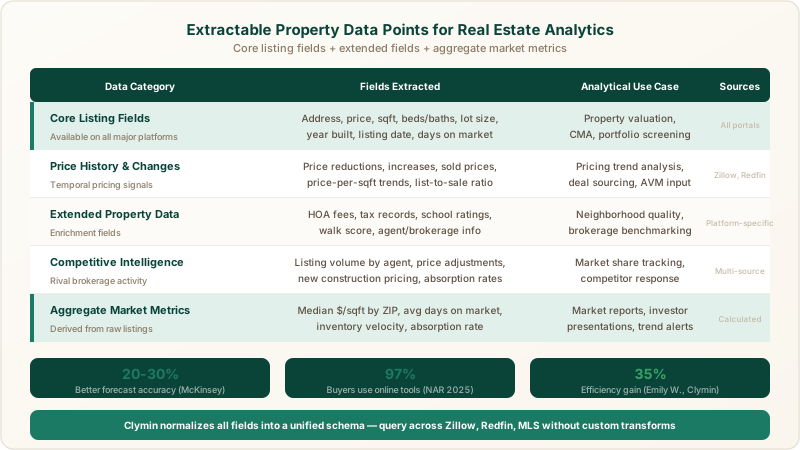
Beyond individual listings, scraped data enables aggregate market metrics: median price per square foot by ZIP code, average days on market by property type, listing-to-sale price ratios, and inventory velocity trends. These aggregate signals are what separate basic property lookups from genuine real estate analytics.
Clymin's extraction pipelines capture all available fields from each source and normalize them into a unified schema, so analysts can query across Zillow, Redfin, and MLS data without writing platform-specific transformations.
How to Build a Real Estate Data Analysis Pipeline
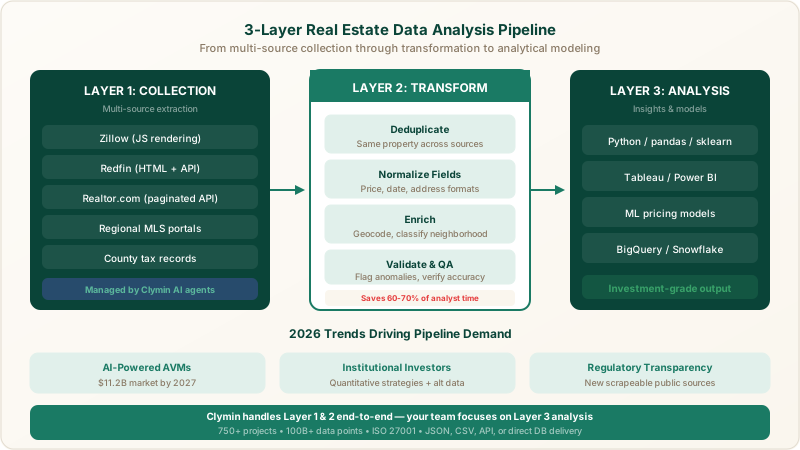
Building a scalable property data analysis pipeline involves three layers: collection, transformation, and analytical modeling. Each layer has specific requirements that determine the quality of downstream insights.
Collection layer. Data ingestion must cover multiple listing platforms simultaneously. According to the National Association of Realtors (NAR) 2025 Profile of Home Buyers and Sellers, 97% of buyers used online tools during their home search, distributing listing engagement across at least five major platforms. Single-source scraping misses competitive context. A managed scraping partner like Clymin handles multi-site extraction and deduplication across all relevant sources automatically.
Transformation layer. Raw scraped records require deduplication (the same property listed on Zillow and Realtor.com), field normalization (price formatting, date standardization), and enrichment (geocoding, neighborhood classification). Without transformation, analysts spend 60-70% of their time cleaning data instead of generating insights.
Analysis layer. Clean, structured property data feeds into analytical tools, Python for statistical modeling, Tableau or Power BI for dashboarding, and machine learning frameworks for predictive pricing models. The analysis layer is only as strong as the data feeding it.
Real Estate Competitive Analysis Using Scraped Data
Competitive analysis in real estate requires tracking what rival brokerages, developers, and investors are doing across markets, not just monitoring your own portfolio. Scraped data makes this possible at scale.
Brokerage competitive intelligence involves tracking listing volumes by agent, average listing prices, days-on-market performance, and price adjustment frequency. A data analyst at a proptech firm can identify which competitors are gaining market share in specific ZIP codes by monitoring new listing velocity week over week.
Developer competitive analysis tracks new construction listings, pre-sale pricing strategies, and absorption rates across competing projects. Gartner's 2025 Technology Trends in Real Estate report notes that data-driven developers who monitor competitor pricing in real time adjust their own pricing 40% faster than those relying on quarterly market reports.
Emily W., a Real Estate Consultant, described the impact directly: "Data collection efficiency improved by 35% with Clymin's automated property listing extraction." That efficiency gain translates into faster competitive response times and deeper market coverage.
For investors, scraped data powers deal-sourcing models that flag undervalued properties based on pricing anomalies, listings priced below comparable sales in the same neighborhood, or properties with extended days-on-market that may indicate motivated sellers. Comparing MLS feeds with web-scraped sources reveals inventory gaps that single-feed analysis misses entirely.
What Trends Are Shaping Property Data Analytics in 2026?
Several macro trends are reshaping how property data is collected and analyzed in 2026, and each one increases the demand for structured, scraped datasets.
AI-powered valuation models are replacing static comparative market analyses (CMAs). According to Statista's 2026 PropTech Market Outlook, the automated valuation model (AVM) market is projected to reach $11.2 billion globally by 2027. AVMs require large volumes of clean, frequently refreshed listing data, exactly the output of a managed scraping pipeline.
Institutional investors are expanding into residential markets, bringing quantitative strategies that depend on alternative data. Hedge funds and REITs now monitor scraped listing data alongside satellite imagery, foot traffic data, and permit filings to build multi-signal investment theses. Property market trend data for 2026 confirms accelerating demand for these composite analytical approaches.
Regulatory transparency is increasing. More cities are mandating public disclosure of rental pricing, vacancy rates, and ownership records, creating new scrapeable data sources that did not exist two years ago. Analysts who build pipelines to capture these emerging sources gain first-mover advantage in local market intelligence.
How Clymin Helps With Real Estate Data Analysis
Clymin provides the complete data collection layer for real estate analytics, from initial source identification through structured dataset delivery. Rather than building and maintaining fragile in-house scrapers, proptech teams plug into Clymin's AI-agentic scraping infrastructure and receive clean, normalized property data on their preferred schedule.
With hundreds of completed data extraction projects and 100 billion data points delivered across industries, Clymin's real estate pipelines are built to handle the structural complexity of multi-platform property data. ISO 27001 and SOC compliance ensure that data handling meets enterprise security requirements, a non-negotiable for institutional real estate firms managing sensitive portfolio data.