
Why 2026 Property Market Data Matters More Than Ever
Real estate professionals who rely on monthly reports and manual MLS research are operating with a structural disadvantage. Market conditions in 2026 are shifting faster than traditional data cycles can capture, and pricing windows are compressing across competitive metros.
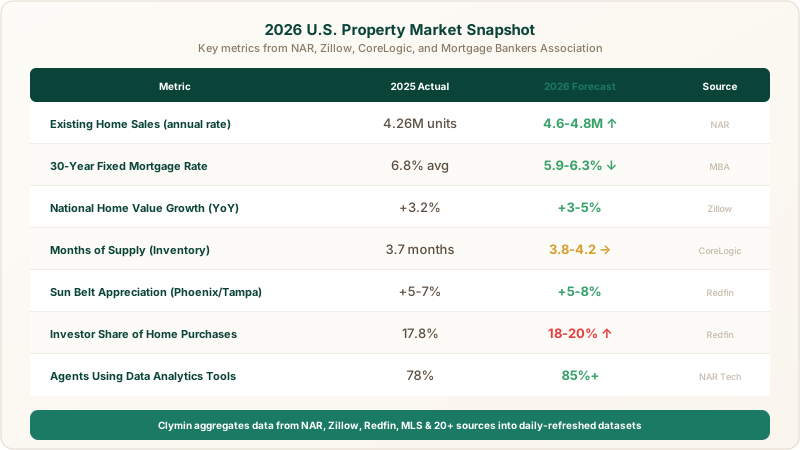
According to the National Association of Realtors (NAR), existing home sales in the U.S. reached a seasonally adjusted annual rate of 4.26 million units in late 2025, signaling a recovery from the 2023-2024 slowdown. NAR's 2026 forecast projects a further 8-12% increase in transaction volume as mortgage rates stabilize near 6%.
Zillow Research reports that national home values grew 3.2% year-over-year through Q4 2025, with Sun Belt metros like Phoenix, Tampa, and Austin leading at 5-7% appreciation. Consultants tracking property market trends 2026 data at the zip-code level, rather than metro averages, gain a measurable edge in pricing accuracy and client advisory.
What Are the Top Real Estate Market Trends Shaping 2026?
Five macro trends are defining the 2026 property landscape for consultants, investors, and proptech firms.
Mortgage rate stabilization is the most significant driver. After two years of rate volatility above 7%, the Mortgage Bankers Association forecasts 30-year fixed rates averaging 5.9-6.3% through 2026. Lower financing costs are unlocking pent-up demand from both first-time buyers and move-up purchasers.
Inventory remains constrained but improving. CoreLogic's 2025 year-end analysis showed active listings nationally at 3.7 months of supply, below the 5-6 month balanced threshold but up from the 2.4-month trough in 2022. New construction permits tracked by the National Association of Home Builders (NAHB) rose 6% in 2025, adding gradual relief to the supply side.
Data-driven pricing is replacing intuition. NAR's 2025 Technology Survey found that 78% of real estate agents now use data analytics tools for pricing and market analysis, up from 61% in 2023. Consultants who aggregate data from multiple listing platforms gain a more complete and timely market picture than those relying on a single MLS feed.
Institutional investment in single-family rentals continues expanding. Redfin data shows investor purchases accounted for 17.8% of home sales in Q3 2025, with build-to-rent communities emerging as a distinct asset class. Tracking investor activity at the parcel level requires granular, multi-source data pipelines.
Sun Belt and secondary metro migration remains strong. Census Bureau estimates show net domestic migration into Texas, Florida, and the Carolinas accelerating through 2025, pushing demand, and data complexity, into markets that lack deep historical datasets.
How Automated Property Data Collection Drives Better Decisions
Manual data collection, copying listing details from Zillow, cross-referencing Redfin sold prices, pulling MLS sheets into spreadsheets, consumes hours that consultants could spend advising clients. Automated property data collection solves the throughput problem and the freshness problem simultaneously.
Structured, daily-refreshed feeds covering active listings, price changes, days on market, and sold comparables allow consultants to build pricing models grounded in current conditions rather than last month's snapshot. Emily W., a Real Estate Consultant, noted that her data collection efficiency improved by 35% after switching to Clymin's automated property listing extraction.
The benefits of automated property data collection extend beyond speed. Aggregating listings from multiple sources, national portals, regional MLS systems, and brokerage sites, creates a deduplicated, unified dataset that eliminates blind spots. A consultant analyzing the rental market in a specific metro can track vacancy rates, rental price trends, and lease-up velocity across platforms without toggling between browser tabs.
Clymin's AI-agentic scraping approach handles the technical complexity, anti-bot defenses, JavaScript rendering, schema changes, so real estate teams receive clean, structured data on schedule without maintaining scraping infrastructure.
What Property Data Points Should Consultants Track in 2026?
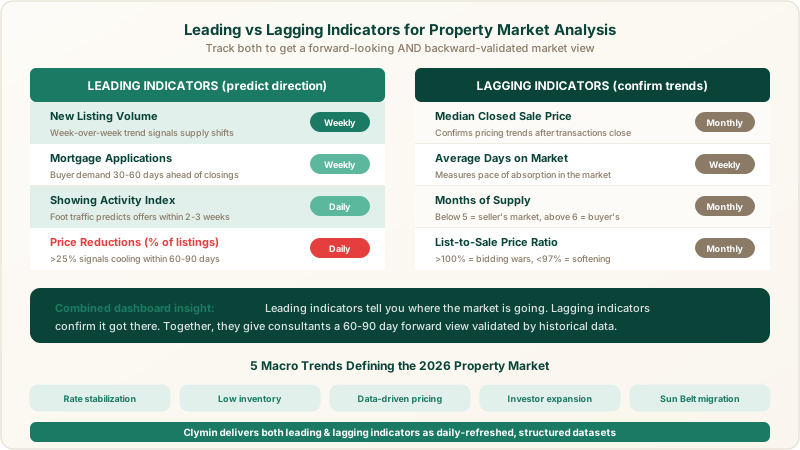
Tracking the right metrics separates reactive analysis from predictive intelligence. Real estate consultants focused on property market forecast 2026 accuracy should monitor a specific set of leading and lagging indicators.
Leading indicators that signal market direction before prices move include: new listing volume (week-over-week), mortgage application counts, showing activity indices, and price reductions as a percentage of active inventory. A spike in price reductions above 25% of listings historically precedes a local market cooling within 60-90 days.
Lagging indicators that confirm trends already in motion include: median closed sale price, average days on market, months of supply, and list-to-sale price ratio. Combining leading and lagging data into a dashboard, refreshed daily via automated extraction, gives consultants a forward-looking and backward-validated view of any micro-market.
For deeper analysis, consultants can layer scraped listing data with market analytics derived from aggregated property datasets. Correlating listing price trends with demographic data, permit activity, and employment figures produces the kind of comprehensive market intelligence that institutional investors pay six figures for.
Clymin delivers these data points in JSON, CSV, or direct database formats, structured and ready for analysis, eliminating the transformation bottleneck that slows most in-house data projects.
How Clymin Helps Real Estate Professionals Stay Ahead
Clymin's managed real estate data scraping service is built for the specific challenges of property market data: fragmented sources, anti-bot defenses, and the need for daily-fresh, deduplicated datasets. With hundreds of data extraction projects delivered across 40+ customers and over 100 billion data points extracted since 2012, Clymin brings proven infrastructure to real estate data at any scale.
Real estate consultants and proptech firms use Clymin to automate the entire data pipeline, from extraction through cleansing and delivery, so their teams can focus on analysis and client advisory rather than data wrangling. ISO 27001 certification and GDPR compliance ensure that data handling meets enterprise security standards.
Get Real-Time Property Market Data for Your Analysis
Ready to replace manual listing research with structured, daily-refreshed property datasets? Contact Clymin at contact@clymin.com or schedule a free consultation to discuss your data requirements. 40+ customers trust Clymin to deliver the data that drives smarter decisions.