
Why Grocery Delivery Data Matters in 2026
Online grocery has moved from convenience to competitive battleground. According to Statista's 2025 data, online grocery is one of the fastest-growing retail segments, with double-digit growth projected through 2026 as quick-commerce and same-day delivery expand. Prices, promotions, and availability now shift by the hour across thousands of stores, and the operators who win run on continuously extracted data rather than periodic checks.
Manual tracking cannot keep pace. A single metro can hold hundreds of thousands of grocery SKUs, each with pricing and stock that change with demand, weather, and promotions. Strategy teams at quick-commerce startups, retailers, and CPG brands increasingly treat grocery delivery data as an operational feed, not a one-time report.
How to Extract Grocery Delivery App Data
Extracting grocery delivery data means collecting structured records from platform pages and apps on a schedule, then validating and delivering them. The recurring challenge is not the first pull; it is keeping it running as apps change and defenses tighten.
Much of the highest-value data is app-only. Live availability, substitutions, and delivery windows often exist only in native iOS and Android apps, which requires app-level extraction rather than simple web scraping. That is why grocery is one of the harder targets, and why teams turn to managed providers. For the adjacent food-delivery playbook, see our guide on web scraping for food delivery.
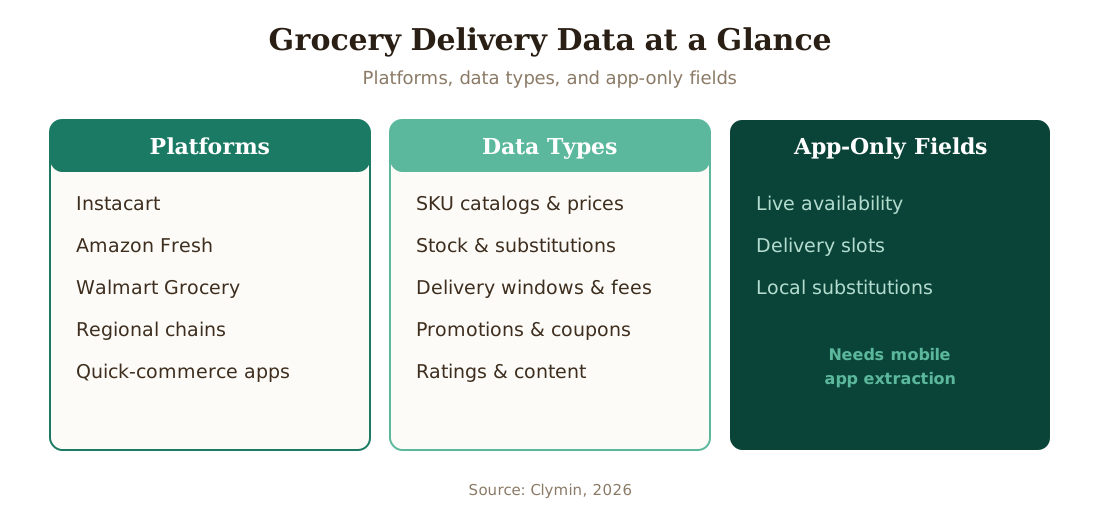 Much grocery delivery data, including live availability and delivery slots, is app-only and requires mobile extraction.
Platforms: Instacart, Amazon Fresh, Walmart Grocery, and More
Coverage strategy depends on which platforms dominate your market. In the US, Instacart, Amazon Fresh, and Walmart Grocery lead, alongside regional chains and quick-commerce apps; other markets have their own dominant players. Each platform structures and defends its data differently, so a scraper that works on one usually fails on the next.
Instacart aggregates many retailers and is rich in SKU, price, and substitution data. Amazon Fresh and Walmart Grocery combine deep catalogs with strong anti-bot defenses. Clymin maintains platform-specific extraction across these sources, including dedicated Instacart grocery data extraction, because platform-specific parsers are what keep data reliable.
What Data You Can Extract
Grocery delivery apps expose a rich set of fields, though coverage varies and much of it is app-only. The most valuable data points map directly to pricing, assortment, and availability decisions.
The grocery delivery data that drives decisions:
- Product catalogs and SKU prices for pricing and assortment benchmarking.
- Stock and substitution availability for out-of-stock and demand signals.
- Delivery windows and fees for service-level and coverage analysis.
- Promotions and coupons for tracking competitor offers.
- Ratings and product content for quality and listing benchmarking.
These feed the same retail metrics that power digital shelf analytics, applied to the grocery and quick-commerce channel.
Grocery and Quick-Commerce Data Trends for 2026
Three trends are reshaping how teams use grocery delivery data in 2026. Dark stores and micro-fulfillment are spreading, which makes hyper-local availability and coverage data more valuable. Dynamic pricing is arriving in grocery, so price-change frequency is rising toward what electronics already see. And assortment competition is intensifying as retailers and quick-commerce players fight over the same baskets.
Each trend raises the premium on fresh, granular, location-level data. For competitive intelligence in this channel, see quick-commerce data intelligence.
How Clymin Helps
Clymin is a managed data extraction service operating from offices in San Francisco and Hyderabad, serving customers across the United States, India, and globally. Clymin extracts grocery delivery data from web and mobile app sources, handles anti-bot defenses and maintenance, and delivers clean, structured datasets on your schedule.
With 12+ years on the hardest sources, including mobile apps that block conventional scraping, Clymin turns grocery delivery apps into a reliable, refreshed data feed. According to Imperva's 2024 Bad Bot Report, automated traffic made up nearly half of all internet traffic in 2023, and high-value grocery platforms respond with strong defenses, which is exactly the collection problem Clymin is built to solve.
Ready to Track the Grocery Delivery Market?
Tell us the platforms, regions, and fields you need, and Clymin will run a free pilot and deliver clean grocery delivery records before you pay anything. Email contact@clymin.com or start a free pilot, one metric, cost per record delivered, no setup fees.