
Why Instacart Grocery Data Matters for Competitive Intelligence
Instacart controls a significant share of the U.S. online grocery delivery market. According to Bloomberg Second Measure's 2025 analysis, Instacart holds approximately 22% of U.S. grocery delivery sales, making it the single largest platform for consumer grocery fulfillment outside of traditional retailer apps. Brands, retailers, and competing platforms that lack structured access to Instacart data are effectively operating with blind spots in their competitive strategy.
Grocery pricing on Instacart varies by retailer partner, geographic zone, and time of day. A single product can have different prices across Kroger, Costco, Safeway, and Sprouts within the same ZIP code. Manually tracking these fluctuations across thousands of SKUs and dozens of metro areas is not feasible for any team relying on spreadsheets or manual checks.
According to McKinsey's 2025 grocery retail report, online grocery penetration in the United States reached 14.5% of total grocery sales, up from 12.4% in 2024. Businesses that fail to monitor Instacart pricing and assortment data risk losing shelf placement and promotional positioning to faster-moving competitors.
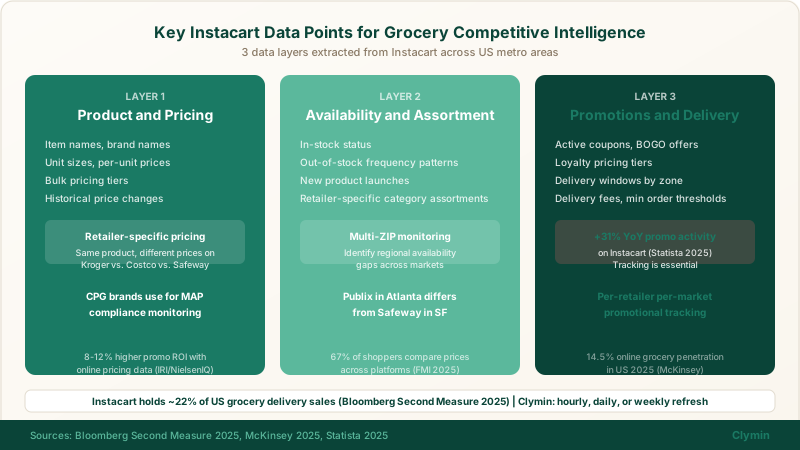
Key data points Clymin extracts from Instacart for grocery competitive intelligence
What Data Can Clymin Extract From Instacart?
Clymin extracts granular grocery data from Instacart that covers every dimension relevant to competitive analysis, pricing optimization, and assortment planning. Each data point is cleansed, normalized, and delivered in structured formats including JSON, CSV, and direct database integration.
Product and pricing data includes item names, brand names, unit sizes, per-unit prices, bulk pricing tiers, and historical price changes tracked over configurable time windows. Clymin captures retailer-specific pricing, the same product often carries different prices on Instacart depending on whether a consumer shops via Kroger, Albertsons, or Costco.
Availability and assortment data covers in-stock status, out-of-stock frequency patterns, new product launches, and retailer-specific category assortments. Clymin monitors these signals across multiple ZIP codes simultaneously, enabling brands to identify regional availability gaps.
Promotional and delivery data includes active coupons, BOGO offers, loyalty pricing, estimated delivery windows, delivery fees by zone, and minimum order thresholds. According to Statista's 2025 digital grocery report, promotional activity on Instacart increased 31% year-over-year, making promotion tracking essential for competitive benchmarking.
How CPG Brands Use Instacart Data for Pricing Strategy
Consumer packaged goods (CPG) brands are among the most active users of Instacart grocery data extraction because online shelf positioning directly impacts sales velocity. Clymin delivers structured Instacart datasets that CPG brands use to monitor MAP (minimum advertised price) compliance, track promotional effectiveness, and benchmark pricing against competitor brands within the same category.
A common workflow involves Clymin extracting daily pricing and promotional data across 50+ metro areas, then delivering normalized datasets that feed directly into a brand's pricing dashboard. Brands compare their product pricing against category competitors on Instacart to identify zones where they are priced above or below market averages.
Clymin's AI-agentic extraction approach adapts automatically when Instacart modifies its page structure or introduces new retailer partnerships, eliminating the maintenance burden that breaks traditional scraping setups. With 40+ customers served across more than a decade of operation, Clymin handles Instacart's frequent front-end updates without data delivery interruptions.
According to IRI (Circana) and NielsenIQ joint research published in 2025, CPG brands that actively monitor online grocery pricing achieve 8-12% higher promotional ROI compared to brands relying solely on syndicated retail data. Structured Instacart data is a core input for this type of pricing optimization.
How Grocery Delivery Platforms Benchmark Against Instacart
Competing grocery delivery platforms, including DoorDash DashMart, Walmart Spark, Amazon Fresh, and Gopuff, use Instacart data to understand assortment breadth, pricing positioning, and delivery speed benchmarks. Clymin provides these platforms with structured, ongoing datasets that make competitive benchmarking repeatable rather than ad hoc.
Key benchmarking dimensions include delivery fee structures across metro areas, average delivery time windows by ZIP code, product catalog depth by category, and promotional frequency. Clymin normalizes these data points across platforms so clients can run direct comparisons without spending engineering hours on data transformation.
For clients already working with Clymin on food delivery data extraction, adding Instacart coverage is a straightforward extension. Clymin manages multi-platform extraction projects where data from Instacart, DoorDash, Uber Eats, and other platforms is delivered in a unified schema, reducing integration complexity.
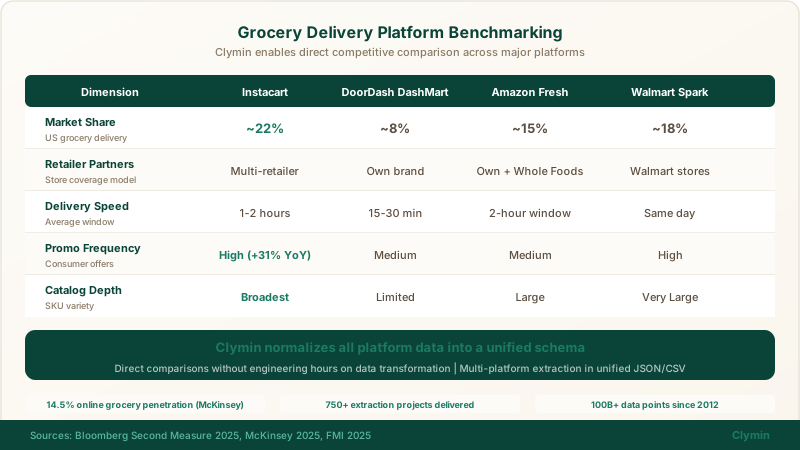
Clymin enables direct competitive benchmarking across major grocery delivery platforms
How Instacart Data Powers Regional Assortment Decisions
Grocery assortment varies significantly by region, and Instacart's retailer partnership model amplifies these differences. A product available on Instacart via Publix in Atlanta may not appear on Instacart via Safeway in San Francisco. Clymin extracts location-specific assortment data that reveals these gaps, enabling brands and retailers to make informed decisions about regional distribution and category management.
Clymin structures geographic data by metro area, ZIP code, and retailer partner so clients can filter and compare assortments at any level of granularity. Brands launching new products use Clymin's Instacart data to identify which retailer-market combinations offer the fastest path to digital shelf placement.
Regional pricing intelligence also supports trade promotion planning. According to the Food Marketing Institute (FMI) 2025 Power of Grocery report, 67% of grocery shoppers compare prices across platforms before ordering, and Instacart's retailer-specific pricing model means that promotional offers must be tracked per retailer per market to capture the full competitive picture.
Ready to Extract Instacart Grocery Data?
Clymin delivers structured, real-time Instacart grocery data tailored to your competitive intelligence needs, whether you are a CPG brand monitoring shelf pricing, a delivery platform benchmarking against Instacart, or a retailer optimizing assortment strategy. Contact Clymin at contact@clymin.com or schedule a free consultation to scope your Instacart data extraction project and receive a custom proposal.