
Why Manual Property Data Collection Fails at Scale
Real estate markets move faster than spreadsheets can keep up with. According to the National Association of Realtors (NAR), the median U.S. home sold in just 17 days in 2025, meaning listing data that is 48 hours stale is already lagging behind market reality. Consultants and analysts who rely on manual exports or periodic data pulls are operating with a structural disadvantage.
The core problem is volume. A single metropolitan market may contain 10,000 to 50,000 active listings spread across Zillow, Redfin, Realtor.com, regional MLS portals, and foreclosure databases. Aggregating those listings manually, let alone keeping them current, requires hours of repetitive work that grows linearly with market coverage. Statista reported that the U.S. real estate software market reached $12.2 billion in 2025, driven largely by proptech firms investing in data automation to replace exactly this type of manual process.
Scaling further introduces a technical barrier. Portals like Redfin and Zillow use JavaScript rendering, infinite scroll, dynamic map-based search, and anti-bot protections that block simple download attempts. Without a managed extraction infrastructure, even technically sophisticated teams spend more time fighting bot detection than analyzing data.
Active U.S. listings by portal and median days-on-market (2026), illustrating why manual data collection cannot keep pace with real estate market velocity.
What Data a Property Listing Extraction Service Can Capture
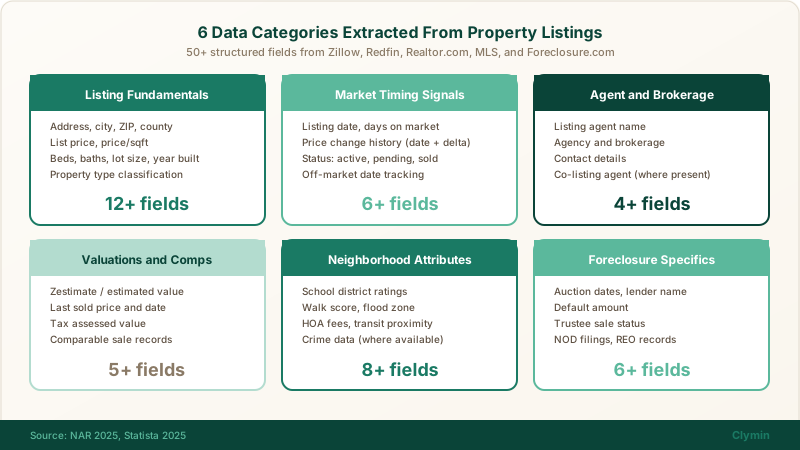
A professional property listing extraction service goes well beyond capturing list price and address. Comprehensive extraction covers the full data surface of a listing, enabling deeper market analysis than portals' native export tools allow.
Fields Clymin extracts from property listing sources include:
- Listing fundamentals: address, city, ZIP, county, list price, price per square foot, property type, bedrooms, bathrooms, lot size, year built
- Market timing signals: listing date, days on market, price change history (date + delta), off-market date, status (active, pending, sold, foreclosure)
- Agent and brokerage data: listing agent name, agency, contact details, co-listing agent where present
- Comparable and valuation fields: Zestimate or estimated value (where available), last sold price, last sold date, tax assessed value
- Neighborhood and location attributes: school district ratings, walk score, flood zone, HOA fees, proximity to transit
- Media counts: number of listing photos, virtual tour availability, 3D tour flag
Foreclosure-specific data, including auction dates, lender name, default amount, and trustee sale status, requires dedicated extraction from sources such as Foreclosure.com, RealtyTrac, and county recorder feeds. Clymin configures separate pipelines for distressed property data on request.
How Redfin and Zillow Data Extraction Actually Works
Redfin and Zillow are the two most requested sources for property listing extraction, and also the most technically challenging. Both platforms use dynamic, JavaScript-rendered pages that require headless browser automation rather than simple HTTP requests. Zillow, in particular, updates its anti-bot infrastructure regularly and serves different content to suspected automated clients.
Clymin's AI agents handle Redfin and Zillow extraction through adaptive session management, rotating residential proxies, and behavioral mimicry that keeps extraction invisible to detection systems. When either platform pushes a layout change or tightens bot filters, which both do several times per year, Clymin's AI detects the change and self-corrects without requiring a support ticket from your team. This is the core difference between a managed Redfin data extraction service and a static scraper that breaks on the next deployment.
Delivery options for Redfin and Zillow data include flat-file exports (CSV, JSON, Parquet), direct database writes (PostgreSQL, BigQuery, Snowflake), or API endpoints that your internal tools query on demand. Refresh frequencies range from daily snapshots to near-real-time streaming for clients tracking fast-moving markets. For a side-by-side look at what each portal's data structure includes and where gaps exist, see our comparison of Zillow scraping vs. Realtor.com scraping.
Foreclosure Data Extraction: A Specialized Use Case
Foreclosure data extraction service requirements differ significantly from standard listing pipelines. Foreclosure records originate from multiple source types, lender notices of default (NOD), lis pendens filings in county court records, trustee sale schedules, and REO (real estate owned) listings from banks, each with a different data structure and update cadence.
According to ATTOM Data Solutions' 2025 U.S. Foreclosure Market Report, one in every 1,461 U.S. housing units had a foreclosure filing in the first half of 2025. Consultants and investment firms tracking distressed property opportunities need timely, structured access to this data across multiple counties and states simultaneously, which is operationally impossible to manage manually.
Clymin builds dedicated foreclosure extraction pipelines that aggregate NOD filings, auction schedules, and post-auction REO records into a single normalized dataset. Geographic coverage is configurable from individual counties to nationwide. Data is delivered with standardized field names across sources so analysts work with a consistent schema regardless of whether a record originated from a county courthouse feed or a national aggregator like Foreclosure.com.
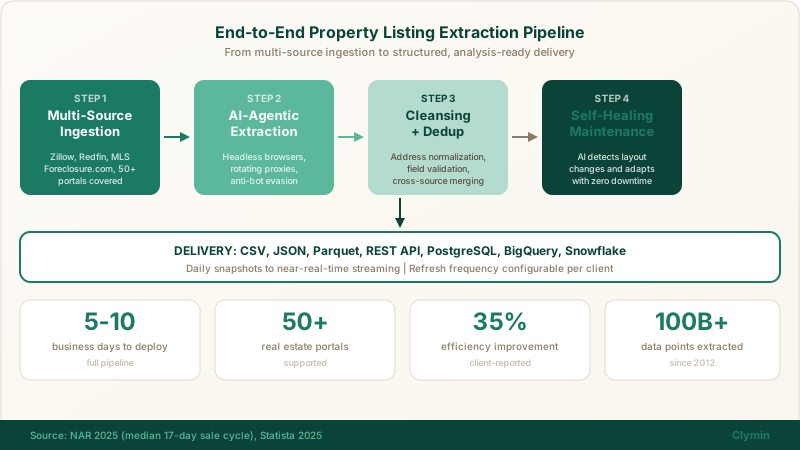
Clymin's end-to-end property listing extraction pipeline, from multi-source ingestion to structured, analysis-ready delivery.
Benchmarking Property Data Extraction Providers
Real estate consultants evaluating a property data extraction provider typically compare on four dimensions: source coverage, data freshness, delivery format flexibility, and maintenance reliability. The table below summarizes how these factors differentiate managed services from self-hosted scraping tools.
| Factor | DIY / Open-Source Scraper | Static Managed Scraper | Clymin (AI-Agentic) |
|---|---|---|---|
| Source coverage | Limited to what you build | Fixed list of supported sites | 50+ portals + custom sources |
| Handles site changes | Breaks, requires manual fix | Slow support ticket process | AI agents self-correct automatically |
| Data cleansing | Raw, uncleaned output | Basic normalization | Full cleansing + deduplication |
| Delivery formats | File only | File or basic API | CSV, JSON, API, direct DB write |
| Foreclosure data | Rarely supported | Sometimes available | Dedicated pipeline, configurable |
| Setup time | Weeks to months | 2–4 weeks | 5–10 business days |
| Ongoing maintenance | Your team's responsibility | Included, reactive | Included, proactive |
Emily W., a Real Estate Consultant who relies on property listing data for market analysis, put it directly: "Data collection efficiency improved by 35% with Clymin's automated property listing extraction." That improvement came from eliminating manual portal exports and replacing them with a scheduled, clean data feed that refreshed automatically.
Clymin's approach to AI-agentic extraction, where agents learn source structures and adapt to changes without human intervention, is detailed at /resources/ai-web-scraping-services#ai-agentic-scraping. Across hundreds of projects delivered since 2012, reliable maintenance has been the feature clients cite most when recommending Clymin to peers.
MLS Data vs. Web Scraping: Which Source Is Right for Your Use Case?
MLS (Multiple Listing Service) data and web-scraped portal data serve different analytical purposes, and many real estate data operations require both. MLS data is authoritative, agent-entered, and includes fields that portals strip or aggregate, such as showing instructions, commission splits, and internal listing notes. Access typically requires MLS membership or an RESO-compliant data feed license.
Web-scraped data from portals like Zillow and Redfin covers a broader geographic footprint and is accessible without membership barriers. Portal data also includes consumer-facing enrichments, Zestimates, neighborhood ratings, and user-generated reviews, that MLS feeds do not carry. For investment analysis, competitive benchmarking, and market trend modeling, portal data often covers more use cases than MLS alone.
Clymin handles both sources: structured MLS feed integration for clients with existing data agreements, and direct portal extraction for clients who need broader coverage without MLS access. For a detailed breakdown of when each source is the better fit, read our comparison of MLS data vs. web scraping for property data.
Building a Reliable Property Data Pipeline With Clymin
A property listing extraction pipeline with Clymin begins with a scoping consultation to define source targets, geographic coverage, required fields, and delivery cadence. Clymin then configures and deploys AI extraction agents against each source, handling authentication, pagination, map-based search traversal, and rate management. Clean, structured data begins flowing within 5–10 business days of kickoff.
Ongoing pipeline reliability is Clymin's responsibility, not yours. When Redfin updates its DOM structure or Zillow rolls out a new anti-bot layer, Clymin's agents detect and adapt. Clients receive data on schedule without managing infrastructure or filing support tickets. With 40+ customers served across 9+ industries and over 100 billion data points extracted, Clymin has the operational depth to handle data at the volume real estate markets demand.
For a broader look at how real estate firms use web-scraped data beyond listing extraction, including investment analysis and market trend modeling, see our guide to real estate data scraping services.
Ready to Automate Your Property Listing Data Collection?
Property markets don't wait for manual exports. If your team is spending hours aggregating listing data that is outdated before analysis begins, a managed extraction pipeline from Clymin eliminates that bottleneck permanently.
Get a Free Consultation to scope your property listing extraction requirements, or book a meeting directly with our real estate data team. You can also reach us at contact@clymin.com with your source list and coverage geography, we will respond with a project outline within one business day.