
Why Real Estate Companies Need Listing Data at Scale
Real estate professionals in 2026 face a fragmented data landscape. Property listings are spread across dozens of platforms, MLS systems, and regional portals. Manually tracking pricing, inventory, and market trends across these sources is unsustainable for firms operating in competitive markets like San Francisco, New York, or Austin.
According to the National Association of Realtors' 2025 Technology Survey, 51% of real estate firms now use data analytics tools to inform pricing decisions. Statista reports that the US proptech market reached $32 billion in revenue in 2025, driven largely by demand for automated data collection. The firms gaining a competitive edge are those extracting structured listing data in real time rather than relying on quarterly market reports.
Clymin works with real estate consultants, proptech companies, and investment firms who need property listing data extracted from multiple platforms on a daily or weekly basis. The legal question is not whether you should collect this data, but how to do it compliantly.
What US Courts Have Said About Scraping Public Data
The legal landscape for web scraping has shifted significantly in favor of data collectors over the past five years. Two landmark cases provide the foundation for legal real estate scraping in 2026.
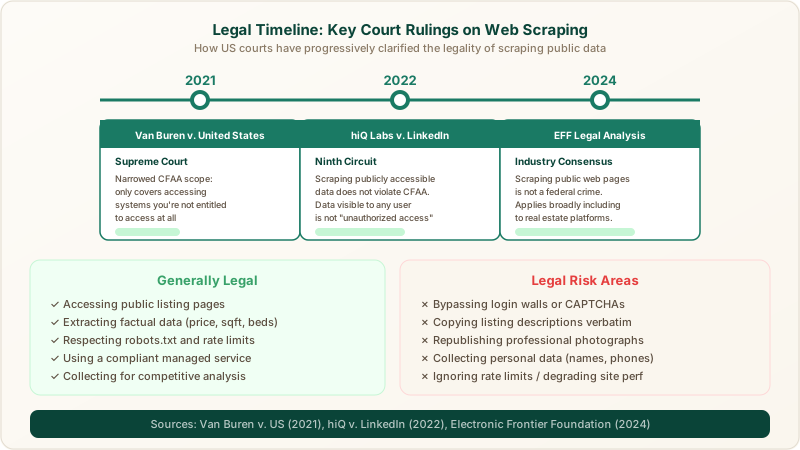
hiQ Labs v. LinkedIn (Ninth Circuit, 2022): The court ruled that scraping publicly accessible data does not violate the CFAA. LinkedIn had attempted to block hiQ from collecting public profile data, but the court held that accessing information available to any internet user is not "unauthorized access" under federal law. Real estate platforms that display listings publicly face a similar legal framework.
Van Buren v. United States (Supreme Court, 2021): The Supreme Court narrowed the CFAA's scope, ruling that the law only covers individuals who access systems they are not entitled to access at all, not those who access permitted systems for unauthorized purposes. Visiting a public real estate listing page falls squarely within permitted access.
According to the Electronic Frontier Foundation's 2024 analysis, these rulings collectively establish that scraping public-facing web pages is not a federal crime. Clymin designs its data extraction workflows to operate strictly within these legal boundaries, collecting only publicly accessible listing data.
Where the Legal Risks Actually Are
While scraping public data is broadly legal, real estate companies still face genuine legal risks in three specific areas. Understanding these boundaries is critical before launching any data collection program.
Terms of Service violations remain the most common source of legal disputes. Platforms like Zillow and Realtor.com include anti-scraping language in their ToS. While violating ToS is not a criminal offense under the CFAA (per Van Buren), it can support a breach-of-contract civil claim. In 2024, a federal court in California ruled that ToS violations could form the basis of a state-law claim even when no CFAA violation occurred.
Copyright infringement applies when scraped content is republished verbatim. Property descriptions, professional photographs, and curated market analyses are copyrighted works. Extracting factual data points like price, square footage, bedroom count, and address is generally permissible. Copying entire listing descriptions or agent-authored content is not.
Privacy law compliance is increasingly relevant. States including California (CCPA/CPRA), Virginia (VDPA), and Colorado have enacted consumer privacy laws. Scraping personal information such as homeowner names, phone numbers, or email addresses from listing pages can trigger compliance obligations under these statutes. The European GDPR imposes even stricter rules for firms operating internationally.
How to Scrape Real Estate Listings Compliantly in 2026
Clymin recommends a compliance-first approach to real estate data extraction. Following these guidelines keeps your scraping program within legal boundaries while delivering the structured property data your business needs.
Limit collection to publicly accessible pages
Never log into accounts, bypass CAPTCHAs, or circumvent IP blocks to access listing data. If a page is visible in a standard browser without authentication, the data is generally fair game.
Respect robots.txt and rate limits
Ethical scraping honors the technical signals a website sends. Excessive request volumes that degrade site performance can trigger tortious-interference or trespass-to-chattels claims, even when the underlying data is public.
Extract facts, not creative works
Collect structured data fields like price, address, property type, lot size, and listing date. Avoid copying agent remarks, professional photos, or proprietary market scores verbatim.
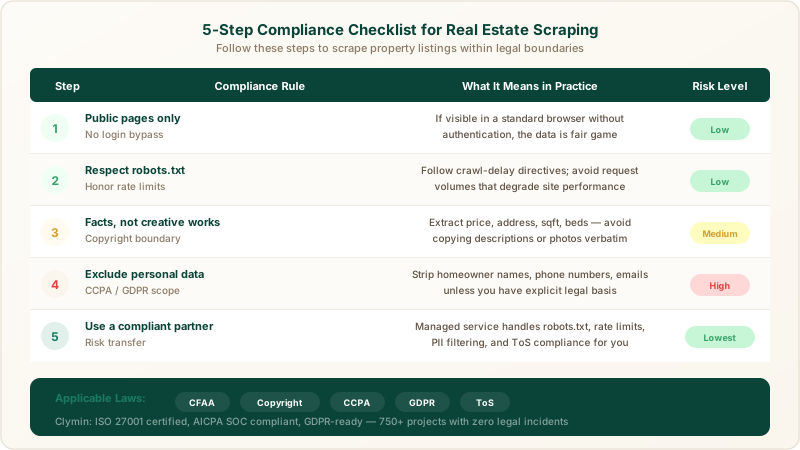
Exclude personal data unless you have a lawful basis
Strip homeowner names, phone numbers, and email addresses from your datasets unless your use case has explicit legal justification under applicable privacy laws.
Partner with a compliant managed service
Clymin's AI-agentic scraping infrastructure is built with compliance guardrails from the ground up. With hundreds of projects delivered across regulated industries, Clymin handles robots.txt compliance, rate limiting, data cleansing, and privacy filtering so your team can focus on analysis rather than legal risk management. Learn more about Clymin's approach to AI-agentic data extraction.
How Clymin Helps Real Estate Firms Stay Compliant
Real estate companies partnering with Clymin gain access to a fully managed, compliance-aware data extraction service. Rather than building and maintaining in-house scrapers that require constant legal oversight, firms rely on Clymin's over a decade of experience navigating the legal and technical complexities of web scraping.
Emily W., a Real Estate Consultant, shared her experience: data collection efficiency improved by 35% after switching to Clymin's automated property listing extraction. That improvement came with zero legal incidents because Clymin's infrastructure enforces compliance at every step.
Clymin extracts structured property data from dozens of listing platforms and delivers clean datasets via API, CSV, or direct database integration. Every project follows a documented compliance framework covering CFAA, state privacy laws, and platform-specific ToS considerations.