
What Property Data Fields Can You Extract From Listing Sites?
Property listing sites contain dozens of structured and semi-structured data fields that can be systematically extracted. Each field category serves a different analytical purpose for data analysts building market models or investment dashboards.
Core property data fields available for extraction include:
- Listing price and price history, current asking price, previous price changes, original list price, and sold price where available
- Property address and geolocation, full street address, city, state, ZIP code, latitude, longitude, and neighborhood or subdivision name
- Physical attributes, square footage, lot size, bedroom count, bathroom count, garage spaces, stories, and year built
- Listing metadata, MLS number, listing date, days on market, listing status (active, pending, sold, withdrawn), and listing agent or brokerage
- Financial data, estimated monthly mortgage, property tax history, HOA fees, and Zestimate or comparable automated valuations
According to the National Association of Realtors' 2025 Technology Survey, 97% of home buyers used internet-based tools during their property search, making listing site data the single largest source of real estate market intelligence. Automated extraction is the only viable method for analysts tracking thousands of listings across multiple platforms.
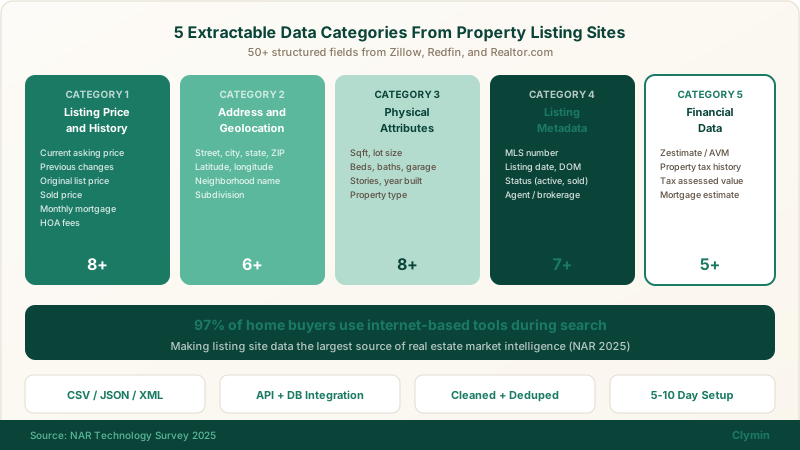
Five categories of property listing data extractable from sites like Zillow, Redfin, and Realtor.com.
Can You Scrape Agent and Brokerage Information?
Agent and brokerage data embedded in property listings provides valuable intelligence for proptech companies, lead generation platforms, and market researchers tracking agent performance across regions.
Extractable agent and brokerage fields include:
- Agent name and contact details, phone number, email address, and professional headshot URL
- Brokerage name and office address, affiliated brokerage, office location, and brokerage website
- Agent performance indicators, number of active listings, recently sold properties, and average days on market
- License information, state license numbers where publicly displayed on listing platforms
Real estate consultants use agent-level data to map market share across ZIP codes and identify which brokerages dominate specific neighborhoods. Emily W., a Real Estate Consultant, reported that "data collection efficiency improved by 35% with Clymin's automated property listing extraction."
What Historical and Market Trend Data Can You Extract?
Historical listing data transforms individual property records into longitudinal market datasets that power pricing models, investment analysis, and neighborhood trend reports.
Key historical data points available for extraction:
- Price change history, every recorded price adjustment from initial listing to sale
- Days-on-market trends, how long properties sit before going under contract
- Sold price vs. list price ratios, a market heat indicator showing buyer competition levels
- Listing volume over time, new listings, sold listings, and expired listings by month
- Foreclosure and auction data, pre-foreclosure filings, auction dates, and bank-owned property flags
According to Zillow Research's 2025 Housing Market Report, median days on market fell to 15 days in the 50 most competitive U.S. metro areas during early 2025. Data analysts who track these shifts weekly, rather than relying on quarterly published reports, gain a significant timing advantage for portfolio decisions.
For a broader look at how real estate firms structure their data pipelines, explore our real estate data scraping service.
How Do You Extract Data From Multiple Property Sites at Once?
Real estate data is fragmented across dozens of platforms, and each site structures its listings differently. Extracting from multiple sources simultaneously requires adaptive technology that handles varied page layouts, JavaScript rendering, and anti-bot protections.
Clymin's AI-agentic scraping approach deploys intelligent agents that learn each platform's structure and adapt when layouts change, eliminating the maintenance burden that breaks rule-based scrapers. Data from multiple sources is normalized into a unified schema, so a listing from Zillow and the same property on Realtor.com merge into a single deduplicated record.
Common property listing platforms that data analysts extract from include Zillow, Redfin, Realtor.com, Trulia, LoopNet (commercial), CoStar, Homes.com, and hundreds of regional MLS-powered sites. For a step-by-step walkthrough of multi-site extraction workflows, read our guide on how to scrape property listings from multiple sites.
What Property Data Types Matter Most for Valuation Models?
Data analysts building automated valuation models (AVMs) or comparable market analyses (CMAs) need specific field combinations to generate accurate property estimates.
Priority data types for valuation modeling:
- Comparable sold prices, recent sold prices for properties within a defined radius, matched by bedroom count, square footage, and property type
- Property condition indicators, renovation status, year of last remodel, and listing descriptions mentioning upgrades
- Neighborhood characteristics, school ratings, walk scores, crime statistics, and proximity to transit where available on listing pages
- Tax assessment values, county-assessed property values and annual tax amounts, often displayed alongside listing details
According to the Federal Housing Finance Agency (FHFA) 2025 House Price Index, U.S. house prices increased 4.6% year-over-year in Q4 2024, with significant regional variation. Valuation models that ingest granular, frequently updated listing data outperform those relying on quarterly index updates alone.
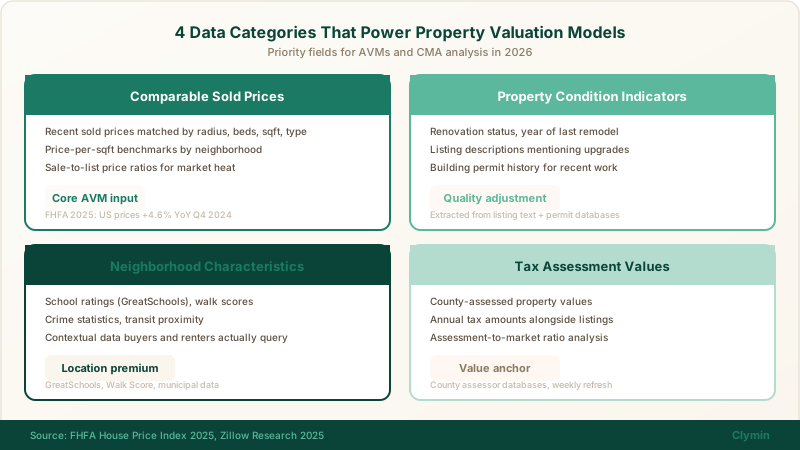
Four data categories that power automated property valuation models in 2026.
Can You Extract Rental Listing Data Too?
Rental listing extraction follows the same principles as sales listing scraping, with additional data fields specific to the rental market.
Rental-specific data fields available for extraction:
- Monthly rent and deposit amounts, asking rent, security deposit, and application fees
- Lease terms, minimum lease duration, pet policies, income requirements, and move-in specials
- Unit-level details, floor plan type, unit number, available date, and included amenities (in-unit laundry, parking, gym access)
- Property management contacts, management company name, phone number, and application portal links
Data analysts tracking rental markets use these fields to build rent-roll models, calculate cap rates for investment properties, and identify neighborhoods with rising or falling vacancy rates. Clymin supports extraction from rental-focused platforms including Apartments.com, Rent.com, Zumper, and Zillow Rentals, alongside traditional sales-oriented listing sites.
What Data Quality Checks Apply to Property Listings?
Raw property listing data contains inconsistencies, duplicate listings across platforms, outdated prices, and incomplete fields. Clymin applies automated quality checks before delivering any dataset.
Standard data quality measures include:
- Deduplication, matching the same property across multiple listing sites using address normalization and MLS cross-referencing
- Price validation, flagging listings with prices that deviate significantly from comparable properties in the same area
- Field completeness scoring, identifying records missing critical fields like square footage or bedroom count
- Freshness verification, excluding stale listings that have been inactive beyond a defined threshold
Clean data reduces analyst prep time and prevents flawed inputs from corrupting valuation models or market reports. For teams needing direct API access to cleaned property datasets, explore our property data API for real estate companies.
How Long Does It Take to Set Up Property Data Extraction?
Setup timelines vary based on the number of source sites, data field complexity, and delivery requirements. Clymin's typical onboarding process for real estate data projects follows three phases: initial consultation to define sources and fields, custom scraper configuration by AI agents, and ongoing data delivery with automated maintenance.
Most real estate extraction projects go from initial consultation to first data delivery within 5 to 10 business days. Complex multi-platform projects covering 10+ listing sites may require 2 to 3 weeks for full schema normalization and quality assurance testing.
With 40+ customers served across more than a decade, Clymin handles the full extraction pipeline, source identification, anti-bot management, data cleansing, and scheduled delivery, so data analysts receive structured, query-ready datasets without building or maintaining scrapers internally.
Still Have Questions?
The Clymin team helps real estate data analysts scope extraction projects, select the right data fields, and configure delivery schedules tailored to their market coverage needs. Reach out at contact@clymin.com or book a free consultation to discuss your property data requirements with a data extraction specialist.