
Why Real Estate Investors Need Web Scraping in 2026
Real estate investment has shifted from gut-instinct deals to data-driven portfolio management. According to Deloitte's 2025 Commercial Real Estate Outlook, 73% of real estate firms now consider data analytics a top strategic priority. Investors who rely on manual property searches across Zillow, Realtor.com, Redfin, and local MLS portals spend an average of 15 to 20 hours per week compiling data that automated scraping delivers in minutes.
The challenge is scale. A single metro area like San Francisco may have 8,000 to 12,000 active listings across multiple platforms at any given time. Each listing contains 30 to 50 data points, price, square footage, lot size, tax history, days on market, neighborhood metrics, and more. Manually tracking price changes, new listings, and delisted properties across even one market is impractical.
Web scraping solves this by programmatically extracting structured data from public listing sites, county tax records, permit databases, and rental platforms. The result is a unified dataset that updates automatically, enabling investors to run quantitative analysis at a scale that manual research cannot match.
What Property Data Can You Scrape for Investment Analysis?
Real estate web scraping captures far more than listing prices. A comprehensive investment data pipeline includes multiple categories of property and market information, each serving a distinct analytical purpose.
Listing data forms the foundation: asking price, property type, square footage, bedroom and bathroom count, lot size, year built, listing date, listing agent, and property descriptions. According to the National Association of Realtors (NAR) 2025 Profile of Home Buyers and Sellers, 97% of homebuyers used the internet during their search, making online listing data the most current reflection of market supply.
Price history and comparable sales data reveals trends that snapshot listing data misses. Scraping historical price changes, original list price versus sold price, and days on market across thousands of transactions lets investors calculate accurate price-per-square-foot benchmarks by neighborhood, property type, and time period.
Rental market data from platforms like Apartments.com, Zillow Rentals, and Craigslist provides the income side of the investment equation. Scraping active rental listings delivers real-time asking rents, vacancy patterns, and amenity comparisons that feed cap rate and cash-on-cash return calculations.
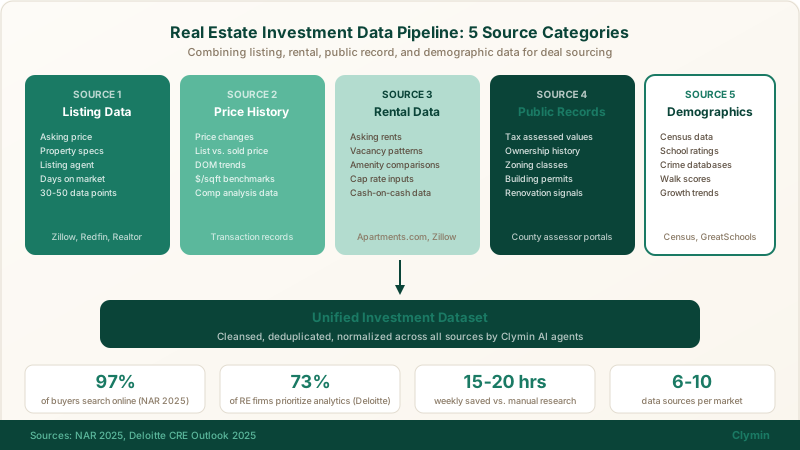
Public records and permits from county assessor websites and building department portals add layers that listing sites omit: tax assessed values, ownership history, zoning classifications, and recent building permits that signal renovation activity or neighborhood investment trends.
Neighborhood and demographic data from census sources, school rating sites, and crime databases provides context that transforms raw property data into investment-grade intelligence. Clymin extracts and merges these diverse data streams into a single structured dataset ready for analysis.
How to Build a Real Estate Investment Data Pipeline
Building an effective real estate data pipeline requires defining your investment strategy first, then designing the data architecture to support it. Investors focused on fix-and-flip properties in the United States need different data than those building long-term rental portfolios or analyzing commercial real estate trends.
Step 1: Define Your Target Markets and Investment Criteria
Start by selecting two to five metro areas and establishing quantitative investment criteria. For example, a rental-focused investor might target properties priced below $350,000 with projected cap rates above 7% in zip codes with population growth exceeding 2% annually. These criteria determine which data sources to scrape and which fields to prioritize.
Step 2: Identify and Map Your Data Sources
Each target market requires multiple data sources to build a complete picture. A typical U.S. residential investment pipeline draws from six to ten sources.
Core listing sites such as Zillow, Redfin, and Realtor.com provide the broadest coverage of active and recently sold properties. Rental platforms including Apartments.com, Zillow Rentals, and local Craigslist boards supply income-side data. County tax assessor portals deliver assessed values, tax rates, and ownership records. Building permit databases from municipal portals reveal renovation and new construction activity.
Clymin's AI agents handle the complexity of mapping data fields across these disparate sources, normalizing addresses, and deduplicating records so investors receive a clean, unified dataset without building custom parsers for each site.
Step 3: Set Up Extraction Schedules Based on Data Freshness Needs
Different data types require different refresh frequencies. New listing monitoring should run daily, or even multiple times per day in competitive markets, to catch fresh listings and price reductions before other investors. According to Redfin's 2025 market data, the median home in the United States received an offer within 30 days of listing, and properties in hot markets like Austin, Phoenix, and Raleigh saw offers within 10 days.
Market trend data and comparable sales can refresh weekly or biweekly. Tax records and permit data typically update monthly or quarterly. Setting appropriate schedules prevents unnecessary costs while ensuring data currency matches analytical needs.
Step 4: Cleanse, Normalize, and Store Your Data
Raw scraped data contains inconsistencies: different date formats, varying address styles, missing fields, and duplicate listings from properties appearing on multiple platforms. Data cleansing transforms messy extractions into analysis-ready datasets.
Address normalization standardizes formats so "123 Main St, Apt 4B" and "123 Main Street #4B" resolve to the same property. Price parsing handles variations like "$425K" and "$425,000." Deduplication uses address matching and property identifiers to merge records from multiple sources into single canonical property records.
Clymin's data cleansing and transformation services automate this entire process, delivering structured datasets in CSV, JSON, or direct database formats that integrate directly with analytical tools.
How to Use Scraped Data for Deal Sourcing and Property Valuation
Deal sourcing, systematically identifying properties that meet investment criteria before competitors find them, is the highest-value application of real estate web scraping. The speed advantage of automated data collection translates directly into deal flow quality.
Identify Undervalued Properties With Automated Comp Analysis
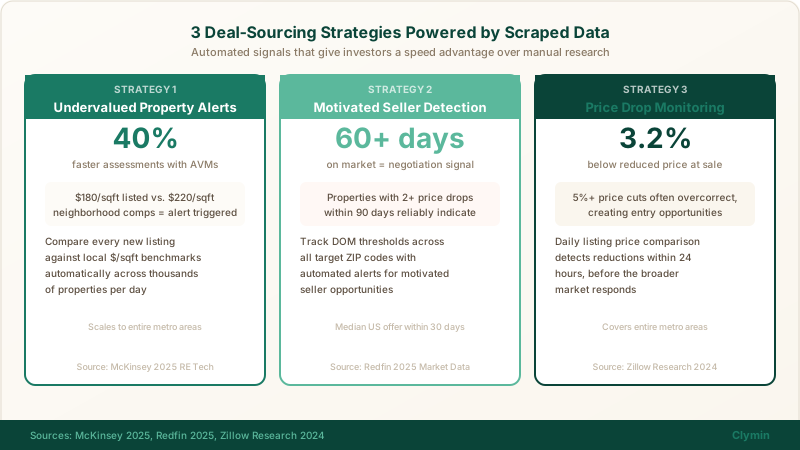
Scraped comparable sales data enables automated valuation models that flag properties listed below their estimated market value. By building a database of recent sold prices per square foot by neighborhood and property type, investors can instantly score every new listing against local benchmarks.
A property listed at $180 per square foot in a neighborhood where recent comps averaged $220 per square foot triggers an alert for manual review. This approach, known as automated comparative market analysis, scales to thousands of properties per day when powered by comprehensive scraped data.
According to McKinsey's 2025 report on real estate technology, firms using automated valuation models reduced property assessment time by 40% while improving accuracy compared to manual comp selection. The key input for these models is fresh, comprehensive transaction data, exactly what web scraping delivers.
Monitor Days on Market for Motivated Seller Signals
Properties with extended days on market often indicate motivated sellers open to below-asking offers. Scraping listing dates and tracking cumulative days on market across entire markets reveals these opportunities systematically rather than through occasional manual searches.
Investors using Clymin's real-time crawling services can set automated alerts when properties in target zip codes exceed specific DOM thresholds, for example, 60 days on market with no price reduction, or properties with two or more price drops within 90 days. These signals reliably indicate negotiation opportunities.
Track Price Reductions in Real Time
Price reductions are among the strongest buy signals in residential real estate. Scraping listing prices daily and comparing against the previous day's data creates an automated price-drop alert system covering entire metro areas.
A study published by Zillow Research in 2024 found that homes with price cuts of 5% or more sold for an average of 3.2% below their reduced price, suggesting that price reductions often overcorrect. Investors who detect these reductions within 24 hours can make offers before the broader market responds.
How to Analyze Rental Markets With Scraped Data
Rental market analysis determines the income potential of investment properties and directly impacts return calculations. Scraping active rental listings provides real-time market intelligence that published reports and annual surveys cannot match.
Calculate Accurate Cap Rates With Real-Time Rental Data
Cap rate, net operating income divided by purchase price, is the standard metric for evaluating rental property investments. Accurate cap rate calculations require current rental data for comparable properties, not year-old survey averages.
Scraping rental listings within a half-mile radius of a target property provides hyper-local rent estimates based on actual market supply. Filtering by bedroom count, square footage range, and amenity level produces comparable rental data that closely matches the target property's potential income.
For example, if scraped data shows 15 active two-bedroom rental listings within a half-mile radius averaging $2,100 per month, and the target property is listed at $280,000, the gross rent multiplier (GRM) of 11.1 and estimated cap rate can be calculated with confidence, a data-driven approach to property investment analysis that reduces reliance on rough estimates.
Detect Emerging Rental Markets Before They Peak
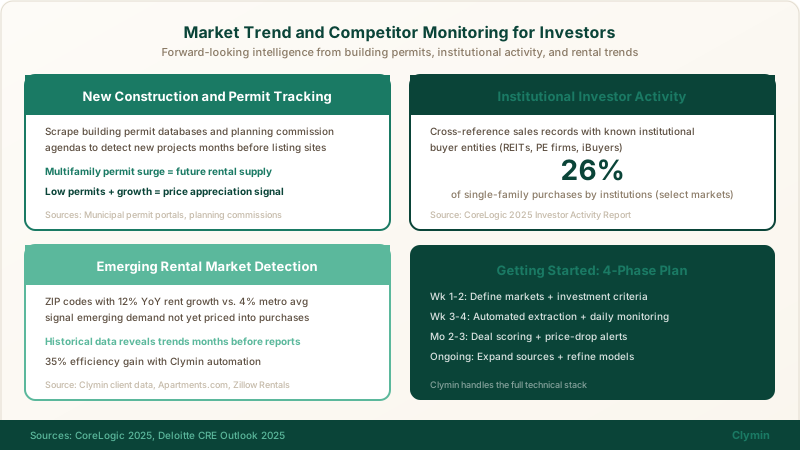
Scraping rental listings over time reveals neighborhoods where asking rents are rising faster than the metro average. A zip code with 12% year-over-year rent growth while the broader market averages 4% signals emerging demand that may not yet be reflected in property purchase prices.
Clymin's historical data extraction capabilities allow investors to build time-series rental datasets that reveal these trends months before they appear in published market reports. Emily W., a Real Estate Consultant, noted that data collection efficiency improved by 35% with Clymin's automated property listing extraction, time savings that translate directly into faster investment decisions.
How to Monitor Market Trends and Competitor Activity
Real estate investment firms and property managers benefit from tracking broader market dynamics beyond individual property analysis. Web scraping enables systematic monitoring of supply, demand, and competitive positioning across entire markets.
Track New Construction and Development Activity
Scraping building permit databases and planning commission agendas reveals new construction projects months before they appear on listing sites. A surge in multifamily building permits in a specific zip code signals future rental supply that may impact existing investment returns. Conversely, a lack of new permits in a growing area suggests supply constraints that support price appreciation.
This type of forward-looking intelligence is unavailable from listing sites alone and represents a significant analytical advantage for investors who systematically collect and analyze permit data. For more context on what types of data are available from property platforms, see data points available from property listing sites.
Monitor Institutional Investor Activity
Large institutional buyers, including REITs, private equity firms, and iBuyers, can shift local market dynamics significantly. Scraping recent sales records and cross-referencing buyer names against known institutional entities reveals where institutional capital is flowing.
According to CoreLogic's 2025 Single-Family Investor Activity Report, institutional investors accounted for approximately 26% of single-family home purchases in select U.S. markets. Tracking these patterns through automated data collection helps smaller investors either follow institutional money into promising markets or avoid competing head-to-head in areas with heavy institutional buying.
How to Stay Compliant When Scraping Real Estate Data
Legal compliance is a legitimate concern for real estate investors using web scraping. Understanding the legal framework and implementing best practices protects your operation while ensuring reliable data access.
The 2022 hiQ Labs v. LinkedIn Supreme Court decision affirmed that scraping publicly available data does not violate the Computer Fraud and Abuse Act (CFAA). Public real estate listings, tax records, and permit data fall squarely within this precedent. However, scraping data behind login walls, bypassing technical access controls, or collecting personal information (such as agent phone numbers or homeowner contact details) for unsolicited marketing may create legal exposure.
Best practices for compliant real estate data scraping include respecting robots.txt directives, limiting request rates to avoid overloading target servers, avoiding collection of personal identifying information beyond what is publicly displayed, and working with providers that maintain compliance as a core service standard.
Clymin operates under ISO 27001 certification and AICPA SOC compliance standards, ensuring that every data extraction project meets the highest security and compliance requirements. Real estate investors who partner with Clymin eliminate compliance risk from their data pipeline entirely, an important consideration given that the scraped data often informs six- and seven-figure investment decisions.
How to Get Started With Real Estate Investment Scraping
Moving from manual property research to a structured data pipeline does not require building technical infrastructure from scratch. A practical starting plan focuses on immediate high-value use cases before expanding to comprehensive market coverage.
Phase 1 (Week 1-2): Define two to three target markets and your core investment criteria. Identify the five to eight data sources most relevant to your strategy, typically two listing sites, one rental platform, the county tax assessor, and the local permit database.
Phase 2 (Week 3-4): Set up automated data extraction with daily listing monitoring and weekly market trend pulls. Begin building your historical baseline dataset for comparative analysis.
Phase 3 (Month 2-3): Expand to automated deal scoring, price-drop alerts, and neighborhood trend analysis. Integrate scraped data with your existing analytical tools or spreadsheets.
Phase 4 (Ongoing): Add secondary data sources, refine scoring models based on actual investment outcomes, and expand to additional markets.
Clymin's managed scraping service handles the entire technical stack, from initial source mapping through ongoing maintenance and data delivery, so investors can focus on analysis and deal execution rather than data engineering. With over a decade of experience and hundreds of data extraction projects delivered across industries, Clymin brings proven infrastructure to real estate investment data challenges.
Ready to Build Your Real Estate Data Advantage?
Real estate investors who automate their data collection with web scraping consistently find better deals faster. Clymin's AI-powered scraping agents extract, cleanse, and deliver property data from any source, so you can focus on investment decisions, not data collection. Contact us at contact@clymin.com or book a free consultation to discuss your real estate data requirements.