
Why Pricing Data Freshness Matters More Than Ever
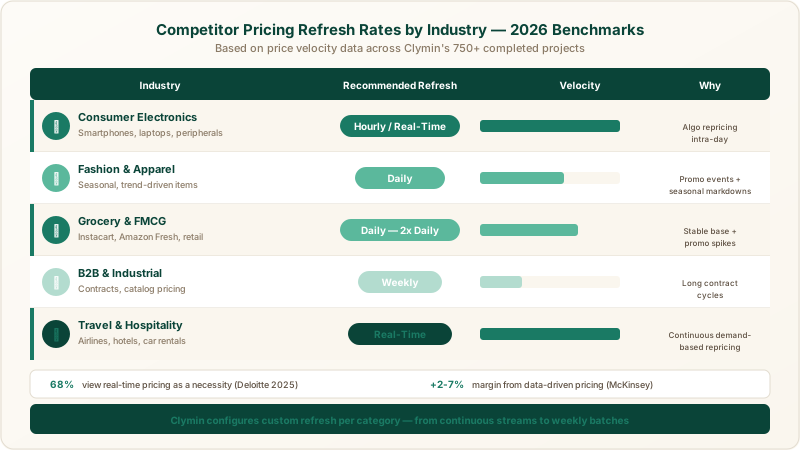
Online pricing environments have grown significantly more dynamic over the past two years. Amazon adjusts prices on millions of listings multiple times per day, and competitors running algorithmic repricing tools can shift their positions within minutes. A 2025 Deloitte pricing survey found that 68% of ecommerce brands now consider real-time pricing intelligence a competitive necessity, up from 41% in 2023.
For pricing managers, the consequence of stale data is straightforward: every hour your competitor data lags behind reality is an hour where you might be overpriced and losing sales, or underpriced and leaving margin on the table. According to McKinsey's pricing research, companies that adopt data-driven pricing strategies see 2% to 7% margin improvements compared to those relying on periodic manual reviews.
The question is not whether to refresh competitor data, every serious pricing team already does. The question is how often, and that answer varies significantly by industry.
Industry-Specific Refresh Rate Benchmarks for 2026
Pricing velocity differs dramatically across categories. Below is a breakdown of recommended competitor data update frequencies based on market behavior observed across Clymin's hundreds of completed projects.
Consumer Electronics: Hourly or Real-Time
Electronics pricing moves fast. Retailers on Amazon and Walmart Marketplace use algorithmic repricing that adjusts listings throughout the day. A price check run at 8 AM may already be outdated by noon. Pricing managers tracking SKUs in categories like smartphones, laptops, or peripherals should aim for hourly data refreshes at minimum. Brands competing on high-volume, low-margin products benefit from near-real-time monitoring, where data is streamed continuously rather than pulled on a schedule.
Fashion and Apparel: Daily
Fashion pricing tends to be more stable on a day-to-day basis, with larger shifts tied to promotional events, seasonal markdowns, and inventory clearance cycles. Daily competitor data updates capture these movements without generating noise from intra-day fluctuations. For fast-fashion brands competing on trend-driven items, twice-daily checks during peak promotional windows (Black Friday, end-of-season sales) can provide an edge.
Grocery and FMCG: Daily to Twice Daily
Grocery and fast-moving consumer goods sit in a middle ground. Prices on platforms like Instacart and Amazon Fresh change frequently, but the competitive set is more stable. Daily updates are sufficient for most SKUs. High-priority items or loss-leader products may warrant twice-daily monitoring during promotional periods.
B2B and Industrial: Weekly
B2B pricing typically changes on longer cycles, monthly contract renewals, quarterly catalog updates, or annual negotiation periods. Weekly competitor data refreshes are adequate for most B2B pricing teams. However, B2B sellers who also list on Amazon Business or other open marketplaces should monitor those specific channels more frequently, as marketplace pricing moves faster than direct sales channels.
Travel and Hospitality: Real-Time
Airline tickets, hotel rooms, and rental cars reprice continuously based on demand, availability, and competitive positioning. Pricing teams in travel need real-time or near-real-time data streams. Batch-based scraping on hourly or daily schedules misses too many fluctuations to be actionable. For a deeper look at building automated monitoring workflows, see our guide on how to monitor competitor prices automatically.
How to Determine the Right Frequency for Your Business
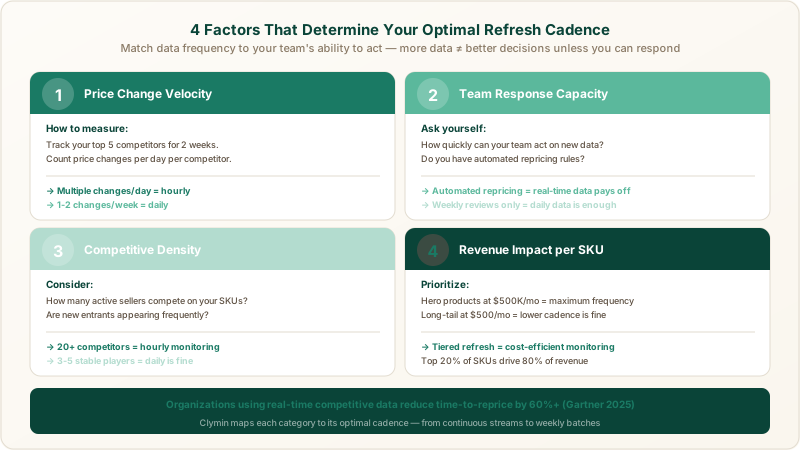
Selecting the right competitor data update frequency comes down to four factors.
Price change velocity in your category. Track how often your top five competitors change prices over a two-week period. Categories where prices shift multiple times daily need hourly or real-time monitoring. Categories with weekly or monthly changes can use a slower cadence.
Your team's response capacity. Collecting data every hour serves no purpose if your team only reviews pricing reports once a week. Match your data refresh rate to your team's ability to act on insights. Automating repricing rules based on incoming data can unlock the value of higher-frequency collection.
Competitive density. Markets with dozens of active competitors and frequent new entrants require more frequent monitoring than markets with a handful of stable players. High-density markets amplify the risk of missing a price move.
Revenue impact per SKU. Focus higher refresh rates on your top-revenue products. A long-tail SKU generating $500 per month does not need the same monitoring intensity as a hero product generating $500,000 per month. Prioritization keeps data costs manageable while protecting the products that drive your business.
How Clymin Supports Flexible Pricing Data Refresh Rates
Clymin's AI-powered managed scraping infrastructure supports configurable refresh schedules ranging from continuous real-time streams to weekly batch deliveries. Rather than forcing clients into a single cadence, Clymin works with pricing managers to map each product category and competitor to the appropriate update frequency.
With over 100 billion data points extracted across hundreds of projects, the platform handles the technical complexity of scaling scraping frequency, including anti-bot adaptation, rate limiting, and site-change resilience, so pricing teams receive clean, structured data without engineering overhead. Learn more about how managed scraping applies to ecommerce in our ecommerce price scraping service overview.
According to Gartner's 2025 Market Guide for Price Optimization, organizations that integrate real-time competitive data into pricing workflows reduce time-to-reprice by 60% or more compared to those using manual or daily-batch approaches.
Ready to Optimize Your Pricing Data Refresh Rate?
Speak with a Clymin data strategist to map your product categories to the right update frequency. Our team configures custom scraping schedules, delivers structured data directly to your analytics stack, and adapts automatically when competitor sites change. Reach out at contact@clymin.com or book a consultation to get started.