What Determines Retail Data Scraping Cost?
Retail pricing is driven by volume and difficulty, not a fixed subscription. The same dataset can cost very different amounts depending on how wide and how fresh it needs to be. Five factors set the price.
The main cost drivers for retail data scraping:
- SKU count. More products tracked means more records, which is the base unit of cost.
- Store and banner count. Each additional store or retailer multiplies the SKUs observed.
- Refresh frequency. Daily is cheaper than intraday; continuous availability tracking costs the most.
- Source difficulty. Grocery and marketplace apps with anti-bot defenses cost more than simple sites.
- Data depth. Prices only are cheaper than prices plus availability, promotions, and content.
Because these compound, the honest way to price retail data is against your real catalog and sources, which is what a pilot reveals. For the ecommerce-specific version, see how much ecommerce data scraping costs.
How Retail Data Scraping Is Priced in 2026
Retail data is usually quoted per record delivered, per request, or on a monthly retainer tied to volume and frequency. Per-record pricing is the most transparent because a record maps cleanly to one product observation at one store at one time, so buyers can forecast cost as they add SKUs or stores.
The per-record rate varies with source difficulty and frequency. A simple daily price pull carries a low rate; high-frequency availability tracking across grocery apps carries a higher one because it costs more to collect reliably. For grocery and quick-commerce specifics, see grocery delivery app data extraction.
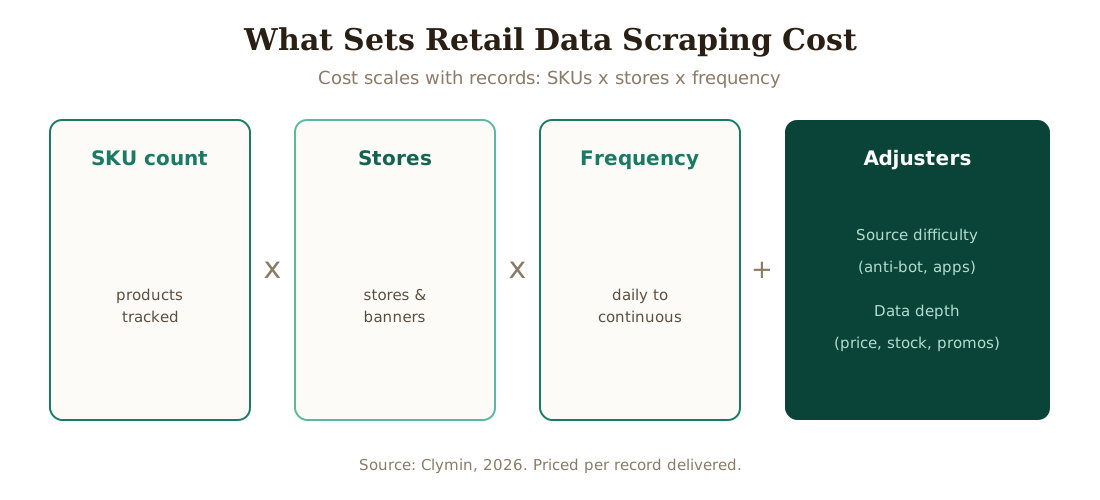 Retail cost scales with records: SKUs times stores times frequency, adjusted for source difficulty and data depth.
Retail Data Scraping ROI: A Grocery Chain Example
The right way to judge cost is against the value the data creates. Consider a grocery chain tracking competitor prices and availability across its assortment to inform repricing. According to McKinsey's pricing research (2023), a 1% improvement in realized price can raise operating profit by around 8% for a typical company.
For a chain doing several hundred million in revenue, even a fraction of a percentage point of margin recovered from better-informed pricing dwarfs the cost of the underlying data feed. That is why retail buyers focus on cost per record and total value rather than the headline data spend: the data is a small input to a large decision.
In-House vs Managed Cost for Retail Data
Building retail scraping in-house looks cheaper until you count the full bill: engineering salaries, proxy and app infrastructure, and the constant maintenance of parsers that break as retail and grocery sites change. According to Grand View Research's 2024 analysis, the web scraping software market exceeded $1 billion in 2023 and is growing at a double-digit annual rate, reflecting how much of the true cost is recurring engineering rather than tooling. Those recurring costs usually exceed a managed fee within months at any real scale.
A managed service folds infrastructure, anti-bot handling, and maintenance into one per-record price. For the full build-versus-buy math, see managed web scraping versus building in-house.
How Clymin Prices Retail Data Scraping
Clymin prices retail data scraping on one metric: cost per record delivered. There are no setup fees, no monthly platform fees, and no customization charges. Anti-bot handling, maintenance, and cleansing are included, so the per-record rate is the whole cost.
That rate reflects the real drivers, SKU and store count, frequency, and source difficulty, rather than a headline subscription. Clymin runs a free pilot on your catalog and sources first, so the quote is based on your actual data. For the managed approach in full, see Clymin's main data extraction service.
Ready to Get a Retail Data Quote?
Tell us your SKUs, stores, sources, and frequency, and Clymin will run a free pilot and quote a per-record price on your real catalog before you commit. Email contact@clymin.com or start a free pilot, one metric, cost per record delivered, no setup fees.