
Why Food Delivery Trends Matter More Than Ever in 2026
The food delivery landscape has fundamentally shifted from a pandemic convenience to a permanent consumer behavior. According to Statista's 2026 Digital Market Outlook, the global online food delivery market will reach $392 billion in revenue this year, representing a 10.3% increase over 2025. Platforms that fail to track and adapt to emerging trends risk losing market share to more agile competitors.
For product managers and strategy directors, understanding these shifts is not optional. Menu pricing changes daily across platforms. Ghost kitchens are opening at record pace. Quick commerce operators are compressing delivery windows below 15 minutes. Without structured, real-time data, decision-making relies on guesswork.
Clymin helps food delivery operators cut through this noise by extracting and structuring competitive data from thousands of restaurant listings, delivery apps, and quick commerce platforms daily.
What Are the Top Food Delivery Industry Trends for 2026?
Seven trends are defining food delivery in 2026, each backed by measurable market data.
1. AI-Powered Menu Personalization. Platforms are using machine learning to customize menu displays based on order history, time of day, and local weather patterns. According to McKinsey's 2025 State of AI report, AI-driven personalization increases average order value by 15-20% for food delivery platforms that implement it effectively.
2. Ghost Kitchen Expansion. Euromonitor International estimates that ghost kitchens will represent 21% of all food delivery orders globally by end of 2026, up from 15% in 2024. Cities like San Francisco, New York, and London are seeing the fastest growth.
3. Sub-15-Minute Quick Commerce. Quick commerce platforms like Getir, Gopuff, and Blinkit are pushing delivery windows below 15 minutes for grocery and prepared meals. This segment is growing 25% year-over-year according to CB Insights' 2026 Quick Commerce Report.
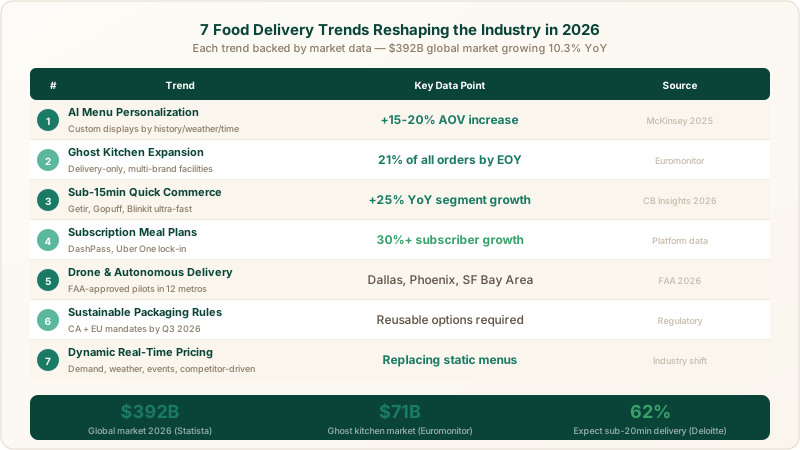
4. Subscription Meal Plans. DoorDash's DashPass and Uber One are reporting subscriber growth rates of 30%+ annually. Subscriptions lock in repeat customers and provide predictable revenue streams.
5. Autonomous and Drone Delivery Pilots. The FAA approved expanded commercial drone delivery zones in 12 US metro areas for 2026. Walmart and Wing (Alphabet) are leading pilots in Dallas, Phoenix, and the San Francisco Bay Area.
6. Sustainable Packaging Mandates. New regulations in California and the EU require food delivery platforms to offer reusable packaging options by Q3 2026, impacting operational costs across the industry.
7. Data-Driven Dynamic Pricing. Platforms are shifting from static menu pricing to real-time dynamic pricing based on demand, weather, local events, and competitor rates. Clymin provides the underlying data infrastructure that powers these pricing models for food delivery operators.
How Is Quick Commerce Reshaping Food Delivery?
Quick commerce is the fastest-growing segment within food delivery, fundamentally changing consumer expectations around speed. Deloitte's 2026 Consumer Trends report found that 62% of food delivery users in urban areas now expect orders to arrive within 20 minutes, compared to just 38% in 2023.
Platforms competing in quick commerce need granular data on delivery zone coverage, rider density, and warehouse proximity. Clymin extracts delivery radius data, estimated delivery times, and menu availability from competing platforms so operators can identify underserved zones and optimize their dark store network.
The quick commerce model also creates new data challenges. Menu assortments change hourly based on warehouse inventory. Pricing fluctuates by zip code. Promotional offers differ between app and web. Manual monitoring is impossible at this scale, which is why managed data scraping services have become essential infrastructure for quick commerce operators.
What Data Points Should Food Delivery Companies Track?
Competitive intelligence in food delivery requires tracking specific, high-frequency data points across multiple platforms simultaneously.
Evidence supporting this:
- Menu prices across 50+ categories change an average of 3-4 times per week on major platforms (Clymin internal benchmarking data, Q1 2026)
- Delivery fee structures vary by as much as 40% between competing platforms in the same zip code, according to Second Measure's 2025 delivery economics analysis
- Customer review sentiment shifts correlate with a 12% change in order volume within 30 days, per a 2025 Harvard Business School study on platform marketplace dynamics
The most valuable data points for food delivery operators include menu item pricing, delivery fees by zone, estimated delivery times, promotional offer frequency, customer rating trends, and restaurant availability hours.
Competitive data dashboard tracking real-time food delivery metrics across platforms
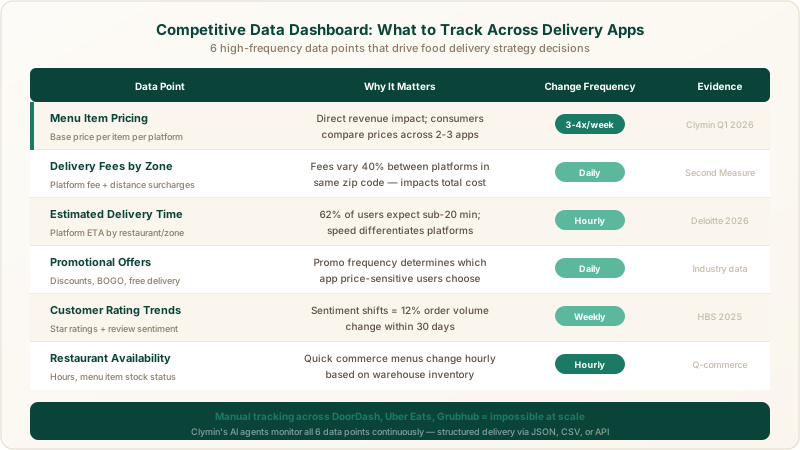
Tracking these data points manually across DoorDash, Uber Eats, Grubhub, and regional platforms is impractical. Clymin's AI agents monitor these metrics continuously across platforms, delivering structured datasets that feed directly into pricing engines and strategy dashboards. With hundreds of projects delivered across industries, Clymin brings proven extraction expertise to the food delivery sector.
How Ghost Kitchens Are Changing the Competitive Landscape
Ghost kitchens, delivery-only restaurant facilities with no dine-in option, are creating a new competitive dynamic that traditional restaurants must understand. According to Euromonitor International, the global ghost kitchen market will reach $71 billion by end of 2026, with the United States accounting for roughly 35% of that total.
Ghost kitchens enable operators to launch new restaurant brands in weeks rather than months, test menu concepts with minimal capital, and operate multiple brands from a single facility. For established restaurant chains, ghost kitchens represent both a threat and an opportunity.
Tracking ghost kitchen activity requires monitoring new brand launches on delivery platforms, identifying which brands share the same physical address, and analyzing menu overlap between virtual brands. This type of intelligence is difficult to gather without automated data extraction, which is why operators increasingly rely on services like those offered by Clymin to map the competitive landscape in real time.
How Clymin Helps Food Delivery Operators Stay Ahead
Clymin provides food delivery platforms and restaurant chains with the structured data infrastructure needed to compete in 2026. Rather than building and maintaining custom scrapers that break when platforms update their interfaces, Clymin's fully managed service handles extraction, cleansing, and delivery of competitive menu and pricing data on any schedule.
With over a decade of experience in data extraction and over 100 billion data points extracted across industries, Clymin brings enterprise-grade reliability to food delivery intelligence. Data is delivered in structured JSON, CSV, or via custom API integration, ready to plug into existing pricing engines, analytics dashboards, and business intelligence tools.