How AI Data Extraction Works
AI data extraction trains machine learning models to recognize what data means, not just where it sits on a page. A model learns that a string is a price, a date, or an address from context, so it can find that field even when a site moves it or renames it. That shift from position to meaning is the core idea.
The typical pipeline combines several steps:
Collect the source
The system fetches the web page, document, or feed, rendering dynamic content where needed.
Interpret with a model
A machine learning model identifies the target fields by meaning rather than by fixed location.
Structure the output
Recognized values are mapped into clean fields, such as JSON or table rows.
Validate
Automated checks flag anomalies before the data is delivered, because no model is perfect.
How AI Data Extraction Differs From Rule-Based Scraping
Rule-based scraping follows fixed instructions: find the price in a specific HTML element. The method is fast and precise until the site changes that element, at which point extraction silently breaks. Maintenance is the recurring cost of the rule-based approach.
AI data extraction interprets content by meaning, so it tolerates layout changes and handles unstructured sources that rules struggle with, like scanned documents. Most reliable systems combine both: rules for stable, high-volume targets and AI for variable or messy ones. For the related distinction between collection and structuring, see our guide on web scraping versus data extraction.
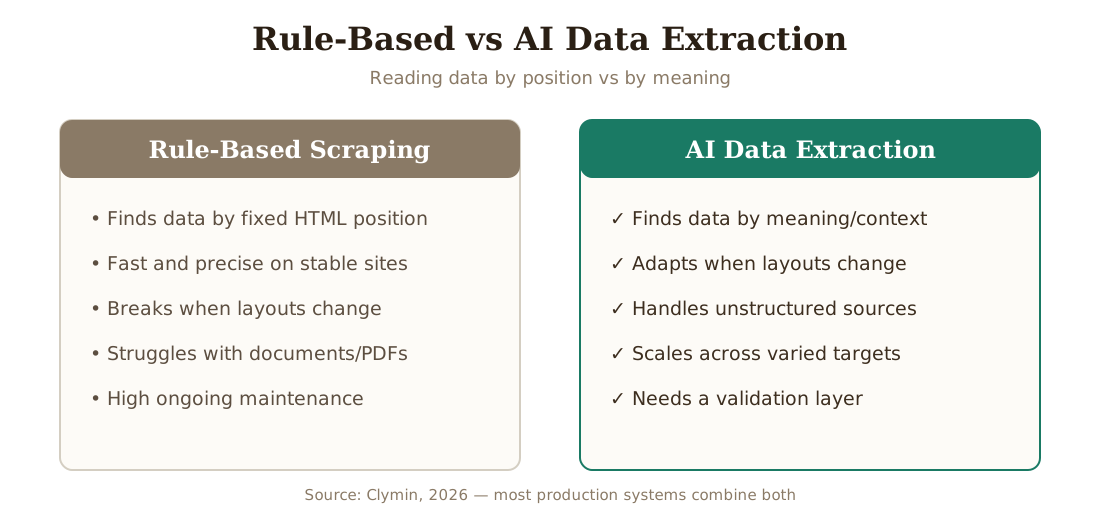 Rule-based scraping is precise but brittle; AI data extraction adapts to change and handles messy sources, at the cost of needing validation.
Is AI Data Extraction Accurate?
AI data extraction can be highly accurate on varied and unstructured sources, but accuracy is never automatic. It depends on the model, the source quality, and the validation layer that checks outputs. AI reduces the breakage that layout changes cause, yet it can also produce confident errors that only validation catches.
The reliable pattern is automation plus verification. According to the 2023 Anaconda State of Data Science report, data professionals spend roughly a third of their time on data preparation and cleaning, so any method that improves first-pass quality has real value. Clymin pairs automated extraction with validation so the delivered dataset is clean, not just collected.
What AI Data Extraction Is Used For
AI data extraction is most valuable wherever sources are numerous, varied, or constantly changing. The technique turns messy inputs into structured data at a scale that manual work and brittle scrapers cannot match.
Common applications include:
- Price and product monitoring across many retailers with differing layouts.
- Document processing for invoices, contracts, and forms that are not web pages.
- Market and alternative data for research, where sources change frequently.
- Catalog and content structuring from inconsistent product pages.
According to Grand View Research's 2024 analysis, the web scraping software market that underpins these use cases exceeded $1 billion in 2023 and is growing at a double-digit annual rate, reflecting rising demand for structured data from varied sources.
How Clymin Fits In
Clymin is a managed data extraction service operating from offices in San Francisco and Hyderabad, serving customers in the United States, India, and globally. Clymin uses AI extraction techniques inside a managed pipeline, so customers receive validated, structured records rather than model output to clean themselves, with 12+ years of experience on the hardest sources.
As of 2026, the value of AI data extraction is not the model alone; it is the combination of adaptive extraction, validation, and reliable delivery. To see how the managed approach works end to end, read about what managed web scraping is or explore Clymin's main data extraction service.
Ready to Put AI Extraction to Work?
If you need structured data from varied or changing sources, Clymin will run a free pilot and deliver validated records before you pay anything. Email contact@clymin.com or start a free pilot, one metric, cost per record delivered, no setup fees.