
Why Web Scraping Ethics Matter
Web scraping is now a normal part of how businesses gather market and competitive data, which is exactly why the ethics around it matter. According to Imperva's 2024 Bad Bot Report, automated traffic made up nearly half of all internet traffic in 2023, so sites and regulators pay close attention to how that automation behaves. Careless scraping degrades sites, invites blocks, and can breach privacy or copyright law.
The reputational stakes are real too. According to Cisco's 2024 Data Privacy Benchmark, a large majority of consumers say a company's data practices affect their trust and their willingness to buy. Data collected irresponsibly is a liability, not an asset. Ethical scraping protects the source, your organization, and the people whose data may be involved.
The Principles of Ethical Web Scraping
Ethical scraping is less a checklist than a small set of principles you apply to every project. Get these right and the specific tactics follow naturally.
The principles that define responsible collection:
- Collect public data only. Focus on information visible without logging in, and avoid authenticated or paywalled content.
- Respect the source's rules. Treat robots.txt, rate limits, and reasonable terms as stated preferences to honor.
- Do no harm. Keep request volume light so you never degrade a site's performance for its real users.
- Minimize personal data. Gather only the fields your purpose needs, and avoid sensitive personal information.
- Use data lawfully. Stay within copyright, database rights, and privacy laws such as GDPR and CCPA.
- Be transparent and purposeful. Have a clear, legitimate reason for the data and be able to explain it.
These principles overlap with the technical side of staying unblocked. For how they play out against site defenses, see our guide on how to handle anti-bot systems when scraping.
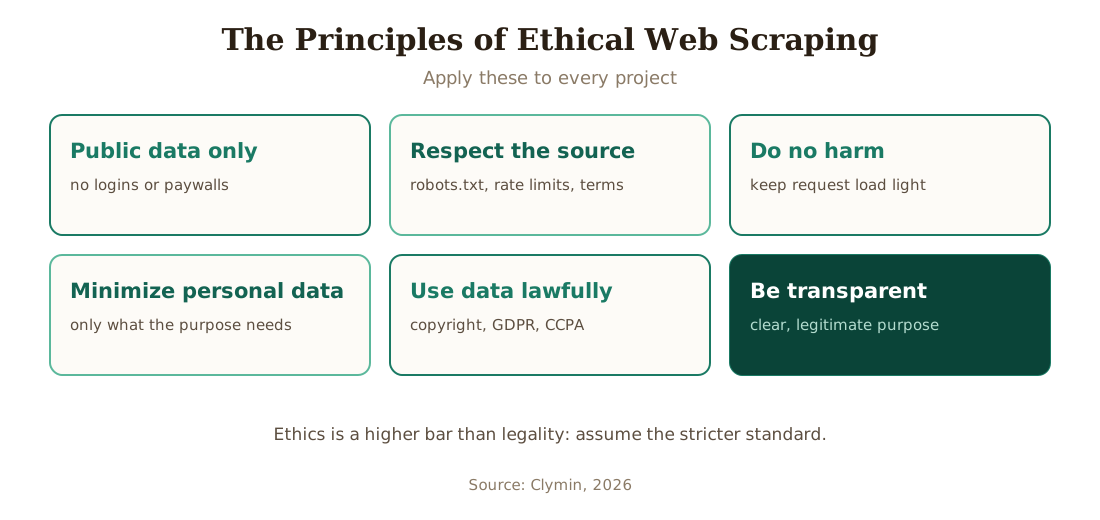 Ethical web scraping rests on a few principles: collect public data, respect the source, do no harm, and use the data lawfully.
A Web Scraping Best-Practices Checklist
Principles become practical through a repeatable checklist. Running every project through the same steps keeps collection consistent and auditable.
Before and during a scraping project:
- Confirm the data is public and that no login or paywall is involved.
- Check robots.txt and terms for stated crawling preferences and any crawl-delay.
- Prefer an official API or data feed when the source offers one.
- Set a respectful request rate and back off on errors instead of retrying hard.
- Cache and deduplicate so you never re-fetch data you already hold.
- Exclude unnecessary personal fields and scrub sensitive data you do not need.
- Document the source, purpose, and filters so the work can be reviewed later.
- Secure and retain data responsibly, deleting what you no longer need.
Doing this well across many sources that change over time is real, ongoing work. For the model that packages it, see what managed web scraping is.
Ethics and Legality: Related but Not the Same
Ethics and legality overlap heavily but are not identical. Something can be legal yet still poor practice, such as scraping a small site so hard that it slows down, and the legal picture varies by jurisdiction and data type. Treating ethics as the higher bar keeps you safe even where the law is unsettled.
Privacy law is where the gap bites hardest. The EU's GDPR, in force since 2018, regulates personal data even when it is publicly visible, so a public profile is not automatically fair to collect and store. California's CCPA and its CPRA amendments take a narrower but still meaningful stance on personal information. The practical rule that satisfies both is to minimize personal data: gather it only when the purpose genuinely requires it, exclude it by default, and delete what you no longer need.
The safest posture is to assume the stricter standard: collect public data, avoid personal and authenticated content, respect stated limits, and license anything that clearly requires it. For where extraction sits as a service category, see best data extraction services.
Common Ethical Pitfalls to Avoid
Most ethical problems in scraping come from a short list of recurring mistakes rather than bad intent. Knowing them makes them easy to avoid.
Watch for these in particular:
- Scraping behind a login. Data that requires authentication is not public, and collecting it usually breaches terms and raises legal risk.
- Overloading small sites. A request rate that a large platform absorbs can slow or crash a small one. Scale your load to the source.
- Hoarding personal data. Collecting names, emails, or profiles you do not need creates privacy exposure with no benefit.
- Ignoring stated preferences. Treating robots.txt or a clear crawl-delay as optional is both discourteous and a fast path to being blocked.
- Repackaging copyrighted content. Republishing scraped articles or images wholesale can infringe copyright even when the collection itself was technically simple.
- Skipping documentation. If you cannot explain what you collected, from where, and why, you cannot defend it later.
Avoiding these is mostly a matter of discipline and defaults. The next section covers how a managed service turns that discipline into something consistent.
How a Managed Service Supports Ethical Scraping
Ethical scraping is easier to promise than to sustain across dozens of sources and constant site changes. A managed service turns principles into standing controls: consistent rate limiting, robots.txt handling, PII filtering, and documented sourcing applied the same way every time.
Clymin bakes these controls into delivery rather than leaving them to each engineer's judgment. Collection stays within compliance frameworks, personal data is minimized, and every source is scoped before work begins, so ethics scale with volume instead of eroding under it.
How Clymin Fits In
Clymin is a managed data extraction service operating from offices in San Francisco and Hyderabad, serving customers across the United States, India, and globally. Clymin collects only public data, respects robots.txt and rate limits, operates under ISO 27001 certification and GDPR-ready and CCPA-aware practices, and flags anything that needs licensing.
With 12+ years on the hardest sources and 99.9% pipeline uptime, Clymin proves that responsible and reliable are not a trade-off. See the managed approach on Clymin's main data extraction service.
Ready to Collect Data the Right Way?
Tell us the public sources you need, and Clymin will run a free pilot and deliver clean, responsibly collected data before you pay anything. Email contact@clymin.com or start a free pilot, one metric, cost per record delivered, no setup fees.