
AI-Powered Rate Intelligence Replaces Manual Monitoring
Revenue management teams at hotel groups historically relied on rate shopping tools with fixed extraction schedules and limited OTA coverage. By 2026, AI-powered data extraction has fundamentally changed competitive intelligence in hospitality.
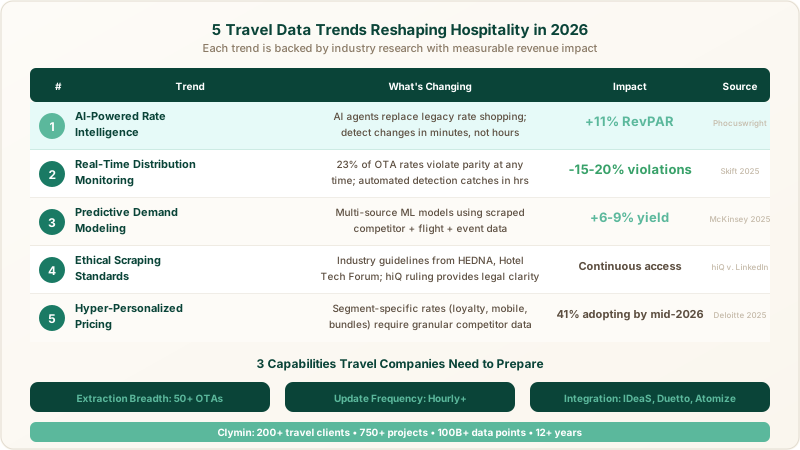
Clymin's AI agents monitor rate changes across 50+ OTA platforms simultaneously, detecting pricing shifts within minutes rather than hours. A Phocuswright 2025 study found that hotels using AI-driven rate intelligence achieve 11% higher RevPAR compared to those using legacy rate shopping tools.
The shift extends beyond hotels. Airlines, car rental companies, and tour operators all leverage AI-powered scraping to monitor competitor pricing in real time. Clymin's hotel rate scraping service exemplifies this approach, delivering normalized rate data directly into revenue management workflows.
Real-Time Distribution Monitoring Becomes Standard
OTA distribution represents the largest revenue channel for most travel businesses, yet rate parity violations and unauthorized discounting remain widespread. Skift Research reported in 2025 that 23% of hotel rates displayed on OTAs violate agreed pricing terms at any given time.
Automated distribution monitoring catches violations within hours rather than the days or weeks required by manual audits. Clymin configures real-time alerts when OTA platforms display rates below contractual minimums or when unauthorized resellers list inventory.
Travel companies investing in distribution monitoring infrastructure report 15-20% reductions in rate parity violations within the first quarter of implementation. The data also reveals channel performance patterns that inform distribution strategy decisions.
Predictive Demand Modeling Relies on Scraped Data
Demand forecasting in travel has evolved from historical booking curves to multi-source predictive models. Forward-looking indicators, search volume trends, OTA availability patterns, event calendars, and competitor rate movements, feed machine learning models that predict demand 90-180 days ahead.
Clymin provides the raw data layer for these models. Extracting competitor availability, pricing trends, and booking pace indicators from OTA platforms creates the training data that demand forecasting systems require.
McKinsey's 2025 Travel & Logistics report estimated that travel companies using predictive demand models based on web-scraped data improve yield by 6-9% compared to those relying solely on internal booking data. The competitive advantage compounds as models learn from longer data histories.
Ethical Scraping Standards Mature Across the Industry
Travel data scraping compliance has moved from a legal gray area to an established practice with clear ethical guidelines. The 2024 hiQ v. LinkedIn ruling reinforced that scraping publicly available data does not violate computer fraud statutes, providing legal clarity for rate monitoring activities.
Industry bodies including the Hotel Technology Forum and HEDNA published data collection guidelines in 2025 that define responsible scraping practices: respecting rate limits, honoring robots.txt directives, avoiding personal data extraction, and maintaining server-friendly request patterns.
Clymin follows these guidelines across all client engagements. Ethical extraction practices also serve a practical purpose, platforms are less likely to block scrapers that behave respectfully, ensuring continuous data access. Learn about Clymin's approach to automated rate monitoring for details on compliance-first data collection.
Hyper-Personalized Pricing Creates New Data Requirements
Travel companies in 2026 increasingly deploy personalized pricing based on customer segment, booking channel, loyalty status, and demand signals. Operating these pricing models requires granular competitor data segmented by the same dimensions.
Clymin extracts loyalty member rates, mobile-exclusive pricing, bundle offers, and segment-specific promotions that traditional rate shopping tools miss. Capturing the full pricing landscape, not just the default public rate, enables revenue managers to compete across every customer touchpoint.
Deloitte's 2025 Hospitality Technology Survey found that 41% of hotel groups plan to implement personalized dynamic pricing by mid-2026. Each deployment requires structured competitive data feeds that update hourly or more frequently.
How Travel Companies Should Prepare
Travel businesses preparing for these data trends should evaluate three capabilities: extraction breadth (how many sources and data points), update frequency (hourly vs. daily), and integration depth (direct feeds into existing revenue systems).
Clymin provides all three as a managed service, eliminating the need to build and maintain scraping infrastructure internally. With over a decade of experience and hundreds of projects completed, Clymin delivers the travel data extraction foundation that modern revenue management demands.
Contact Clymin at contact@clymin.com or book a meeting to discuss how these trends affect your competitive strategy.