Why Real Estate Data Scraping Costs Vary So Much
Property data extraction is not a one-size-fits-all service. A firm tracking 5,000 rental listings across one city pays a fraction of what a national proptech platform spends monitoring 500,000 for-sale and rental records across dozens of sources daily.
According to Deloitte's 2025 Commercial Real Estate Outlook, 73% of real estate firms plan to increase spending on data and analytics tools over the next two years. The growing demand for property intelligence has created a wide pricing spectrum, from lightweight API subscriptions to fully managed enterprise pipelines.
Geographic scope also affects cost. Scraping San Francisco listings from a single MLS feed differs significantly from extracting property data across 50 U.S. metro areas from platforms like Zillow, Redfin, Realtor.com, and regional portals simultaneously.
What Drives Property Data Extraction Pricing?
Five factors determine what you will pay for real estate scraping in 2026. Each one can shift your monthly cost by 20-40%, so understanding them upfront prevents budget surprises.
Number of source platforms. Extracting from one listing site costs far less than orchestrating scrapers across 10+ platforms with different page structures, anti-bot measures, and data schemas. Multi-source pipelines require more engineering, proxy infrastructure, and ongoing maintenance.
Data volume and listing count. Providers typically price by the number of records extracted per cycle. A 10,000-listing monthly pull costs less than a 500,000-listing daily pull. According to Statista's 2025 Real Estate Technology Report, the average proptech company processes over 1.2 million property records per quarter.
Refresh frequency. Weekly snapshots are significantly cheaper than daily or near-real-time feeds. Markets with high listing turnover, like rental markets in San Francisco or New York, often require daily refreshes to capture price changes and new inventory before competitors.
The five primary factors that determine real estate scraping costs, ranked by relative impact on monthly pricing.
Data complexity. Basic fields (address, price, bedrooms, square footage) are straightforward to extract. Enriched datasets that include price history, tax records, neighborhood walkability scores, school ratings, and property photos require more sophisticated parsing, and cost more.
Delivery format. Flat-file delivery (CSV or JSON) is the lowest-cost option. Direct database integration, custom API endpoints, or cloud storage pipelines (AWS S3, Google Cloud Storage) add engineering overhead that typically increases costs by 10-25%.
In-House Scraping vs. Managed Service: A Cost Comparison
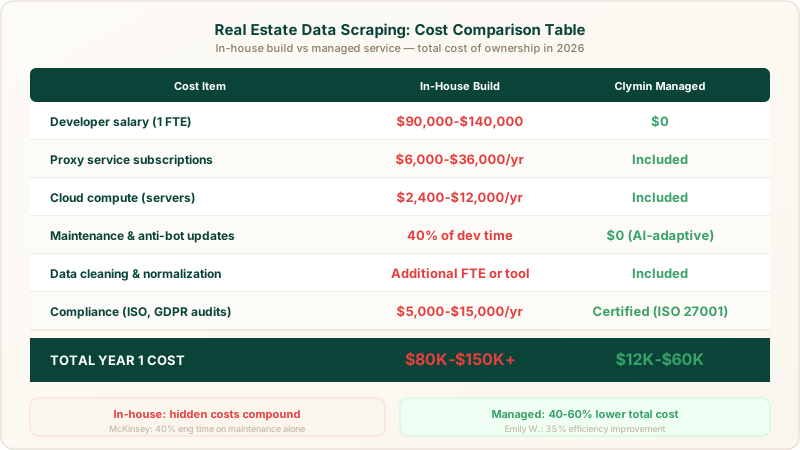
Building property scraping infrastructure internally appears cheaper on the surface, but the total cost of ownership tells a different story. Understanding both paths helps research teams make an informed budget decision.
An in-house setup typically requires at least one dedicated developer ($90,000-$140,000 annual salary in the U.S., according to the Bureau of Labor Statistics 2025 Occupational Outlook), plus proxy service subscriptions ($500-$3,000/month), cloud compute resources ($200-$1,000/month), and ongoing maintenance labor. First-year costs commonly land between $80,000 and $150,000.
Managed scraping providers distribute infrastructure and engineering costs across hundreds of clients. Clymin's project-based pricing model means real estate firms pay only for the data they need, without absorbing the fixed costs of proxy networks, anti-blocking systems, and pipeline maintenance. Emily W., a Real Estate Consultant, reported that "data collection efficiency improved by 35% with Clymin's automated property listing extraction."
The hidden cost of in-house scraping is maintenance. Real estate platforms frequently change page layouts, deploy new anti-bot measures, and restructure their APIs. A McKinsey Digital report from 2025 found that data engineering teams spend up to 40% of their time on pipeline maintenance rather than analysis, a pattern that directly erodes the value of an in-house approach.
How to Budget for Real Estate Scraping in 2026
Accurate budgeting starts with defining your data requirements before requesting quotes. Research teams that skip this step often overpay for data they do not use or underpay for coverage that leaves critical gaps.
Start by mapping your minimum viable dataset. Identify the specific fields, geographies, and source platforms your analysts actually need. A guide to scraping property listings from multiple sites can help you scope which platforms to prioritize.
Build your budget in phases rather than committing to full-scale extraction upfront. Phase one might cover a single metro area and two listing sources at $1,000-$2,000 per month. Phase two expands to regional coverage and adds enriched data fields. Phase three scales nationally with daily refreshes and API delivery.
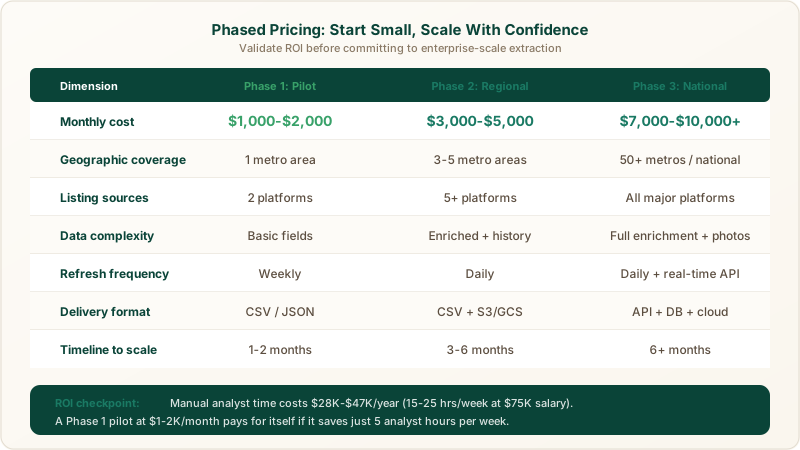
A phased budgeting approach lets research teams validate ROI at each stage before scaling property data extraction costs.
Request itemized quotes that separate data extraction, cleaning, delivery, and maintenance costs. Bundled pricing from managed services like Clymin often delivers better value than assembling individual vendors for proxies, compute, and engineering. Explore Clymin's real estate data scraping service for a detailed breakdown of what managed extraction includes.
How to Evaluate ROI on Property Data Extraction
Cost alone does not determine whether real estate scraping is worth the investment. The real question is whether the extracted data generates more value than its price tag.
Quantify the time savings first. Research analysts manually compiling property data from multiple listing sites typically spend 15-25 hours per week on data collection alone. At an average analyst salary of $75,000 per year, that manual effort costs $28,000-$47,000 annually in labor, often exceeding the cost of a managed scraping service.
Measure competitive advantage second. Firms with fresher, more comprehensive property data close deals faster, price listings more accurately, and identify market opportunities before competitors operating on stale or incomplete datasets. Clymin's AI-agentic scraping approach ensures data pipelines adapt automatically to source changes, maintaining data freshness without manual intervention.
Factor in data quality. Low-cost scraping solutions often deliver unstructured or inconsistent data that requires significant cleaning before analysis. The cost of bad data, measured in flawed market reports, missed pricing trends, and delayed decisions, frequently outweighs the savings from choosing the cheapest provider.
How Clymin Helps
Clymin eliminates the guesswork from real estate data scraping budgets with custom project-based pricing tailored to your exact data requirements. With over a decade of experience and 100B+ data points extracted across hundreds of projects, Clymin's fully managed service handles extraction, cleaning, delivery, and ongoing maintenance, so your research team focuses on analysis, not pipeline engineering. Explore the property data API for real estate companies to see how structured data delivery integrates into existing workflows.
Get a Custom Real Estate Scraping Quote
Every property data extraction project is different. Contact Clymin at contact@clymin.com to schedule a free consultation and receive a custom quote scoped to your specific markets, data sources, and delivery requirements.