
Why Google Hotel Data Matters for Revenue Managers
Google Hotel Search has become the primary rate comparison tool for travelers. Phocuswright's 2025 study found that 63% of hotel booking journeys start with a Google search, and Google's Hotel results display rates from Booking.com, Expedia, Hotels.com, and direct booking channels side by side.
Rate parity violations become immediately visible on Google. When an OTA displays a lower rate than the hotel's direct channel, Google highlights the price difference, directly undermining direct booking strategies. Clymin's monitoring detects these violations within hours.
Competitive positioning in Google Hotel results influences booking conversion. Properties appearing with the lowest rate or best value indicator capture disproportionate click-through. Clymin tracks where your rates rank in Google's comparison tables against competitors.
What Google Hotel Data Does Clymin Extract?
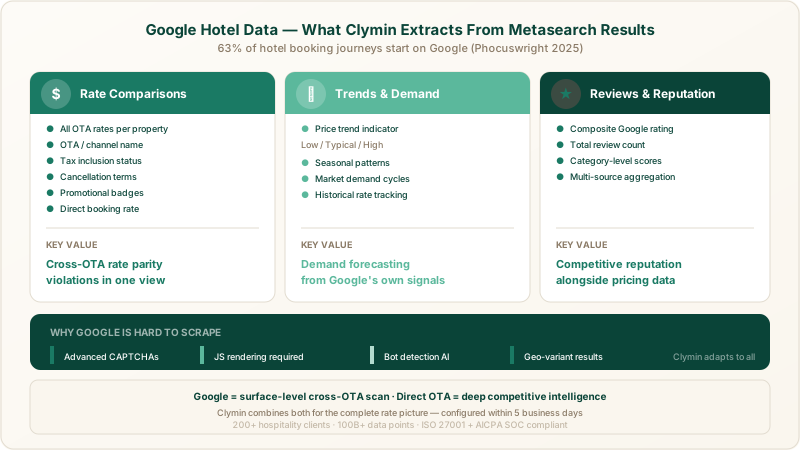
Clymin captures every rate displayed in Google Hotel Search results for properties in your competitive set. Each extraction includes the OTA or booking channel name, displayed rate, tax inclusion status, cancellation terms, and any promotional badges.
Google's rate trend indicators ("Prices are currently low/typical/high") provide demand context that Clymin tracks over time. Trend data reveals seasonal pricing patterns and demand cycles for specific markets and property types.
Guest review aggregation on Google combines ratings from multiple sources. Clymin extracts Google's composite rating, total review count, and category-level scores to track competitive reputation alongside pricing data.
How Does Clymin Handle Google's Anti-Scraping Measures?
Google deploys advanced anti-automation technology across all its properties. CAPTCHAs, JavaScript rendering requirements, and sophisticated bot detection make Google one of the most technically challenging platforms to scrape.
Clymin's AI agents use residential browser profiles that pass Google's verification checks. Request patterns mimic natural search behavior, varying query timing, scrolling patterns, and interaction sequences to avoid detection.
Geographic targeting requires precise location simulation. Hotel prices on Google vary by searcher location. Clymin controls geographic parameters to ensure extracted rates match the market conditions revenue managers need to monitor.
How Google Data Complements OTA-Direct Scraping
Google Hotel Search provides a consolidated rate snapshot, showing how multiple OTAs price the same room simultaneously. Clymin combines Google data with direct OTA extraction through the hotel rate scraping service to build the most complete rate picture available.
Google data excels at identifying rate parity violations quickly because all OTA prices appear in a single view. Direct OTA scraping provides deeper data including room-level availability, cancellation policy details, and promotional terms that Google's interface does not display.
Revenue managers using both data sources through Clymin gain surface-level competitive scanning (Google) plus deep competitive intelligence (direct OTA), the combination that drives automated rate monitoring workflows.
Start Monitoring Google Hotel Prices
Clymin configures Google Hotel price monitoring within 5 business days. Contact the team at contact@clymin.com or book a meeting to discuss your competitive set and monitoring requirements.