Delivery Is Half the Value of Scraped Data
Getting the data is only half the job; getting it into your stack in a usable shape is the other half. Raw HTML or unstructured dumps force your team to build and maintain loaders, mappers, and validation before anyone can query a single row. That work is where a lot of external-data projects stall.
According to the 2023 Anaconda State of Data Science report, data professionals spend roughly a third of their time on data preparation and cleaning rather than analysis. Delivering data already structured and loaded removes most of that overhead. Clymin treats delivery format and destination as part of the specification, not a last step, so the data is useful the moment it lands.
Where Clymin Delivers
The destination should be wherever your analytics already live, not a new silo. Clymin delivers into the warehouses, lakes, and endpoints data teams actually use, matched to your loading process.
Common delivery destinations:
- Cloud warehouses. Snowflake, BigQuery, and Amazon Redshift, by direct table writes or file loads.
- Cloud storage. Amazon S3 and Google Cloud Storage buckets, partitioned to fit your ingestion.
- Databases. Direct writes into your operational or analytical database.
- APIs. REST or custom API endpoints for programmatic pulls.
Because delivery is configured per engagement, the data arrives in the exact place and shape your pipeline expects. For the underlying extraction approach, see Clymin's main data extraction service.
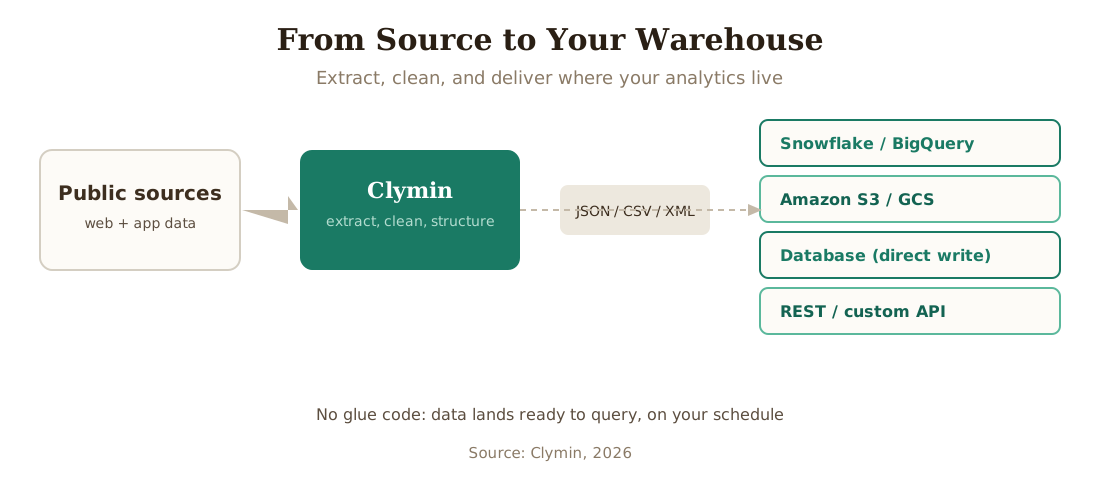 From public sources to your warehouse: Clymin extracts, cleans, and delivers structured records to Snowflake, BigQuery, S3, or your database.
Formats and Scheduling
Format and cadence are part of how usable the data is. Clymin delivers as JSON, CSV, or XML, chosen to fit the load. JSON suits nested and API-driven records, CSV suits straightforward table imports, and XML suits systems that expect it.
Scheduling is just as flexible. Delivery can run in real time, intraday, daily, or weekly, sized to how fresh the data needs to be rather than the maximum a source allows. For a data-heavy use case that depends on delivery format, see web scraping for AI training data.
Schema mapping is part of delivery too. Clymin maps extracted fields to the column names and types your table expects, so records load without a transform step in the middle. Partitioning and file naming follow your ingestion conventions, which keeps loaders simple and predictable.
A Typical Setup: From Scrape to Snowflake
A common pattern shows how little should land on your team. You define the sources, the fields you want, and a target schema, for example a products table with SKU, price, availability, and a timestamp. Clymin extracts and validates the data, maps it to that schema, and writes structured CSV or JSON files to an Amazon S3 bucket on a daily schedule. Your existing loader ingests them into Snowflake automatically, and analysts query a clean, current table the next morning.
Nothing about that setup requires your engineers to write a scraper, manage proxies, or maintain a parser. The contract is a schema and a destination, and everything upstream of the table is Clymin's responsibility. The same pattern works with BigQuery and a Google Cloud Storage bucket, a Redshift load from S3, or a direct database write where a file hop is not wanted.
Skip the Glue Code
The hidden cost of external data is rarely the scraping; it is the integration layer that moves raw output into a warehouse and keeps it working as sources change. Building that yourself means loaders, schema mapping, validation, retries, and monitoring, all of which need maintenance.
A managed delivery model removes it. Clymin structures, validates, and lands the data in your destination, so your engineers point a query at a table instead of building a pipeline. For the broader managed model, see what managed web scraping is, and for how it compares as a service category, see best data extraction services.
How Clymin Fits In
Clymin is a managed data extraction service operating from offices in San Francisco and Hyderabad, serving customers across the United States, India, and globally. According to IDC's 2024 Global DataSphere research, the volume of data organizations manage keeps growing steeply, which makes clean, well-delivered external data more valuable, not less. Clymin extracts, cleans, and delivers that data straight into your stack.
You define the sources, schema, format, and destination. Clymin builds the extraction, keeps it running as sources change, and delivers structured records to your warehouse on schedule, billed on one metric: cost per record delivered, with no setup or platform fees.
Ready to Land Clean Data in Your Warehouse?
Tell us your sources and where the data should land, and Clymin will run a free pilot and deliver structured records into your warehouse or bucket before you pay anything. Email contact@clymin.com or start a free pilot, one metric, cost per record delivered, no setup fees.