What Determines the Cost of Real-Time Data Extraction?
Real-time pricing is driven by how hard and how often the data is collected, not by a fixed subscription. The same record can cost very different amounts depending on the source and cadence. Five factors set the price.
The main cost drivers for a real-time data extraction service:
- Refresh frequency. Every-minute or continuous collection costs more than hourly or daily, because infrastructure runs constantly.
- Source difficulty. Protected sites and mobile apps need more anti-bot work than simple pages.
- Record volume. More records and more sources raise total cost, though per-record rates often fall with scale.
- Geographic coverage. Collecting from many countries requires more proxy infrastructure and localization.
- Data quality needs. Validation, enrichment, and specific delivery formats add processing.
Because these compound, the honest way to price real-time extraction is against your real sources, which is what a pilot reveals. For the wider cost picture, see how much ecommerce data scraping costs.
Real-Time vs Batch Extraction: How Cost Differs
The single biggest lever on cost is frequency. A batch job that runs once a day shares infrastructure and re-checks a source 1 time; a real-time feed may hit the same source hundreds of times a day, multiplying compute, proxy, and detection-handling costs.
Real-time is worth the premium when data has a short shelf life: pricing that changes by the hour, inventory that sells out, or signals that decay in minutes. When a daily snapshot would drive the same decision, batch extraction delivers the same value for far less. According to IDC's 2024 Global DataSphere research, real-time data is the fastest-growing share of all data created, which is why more teams weigh this trade-off each year.
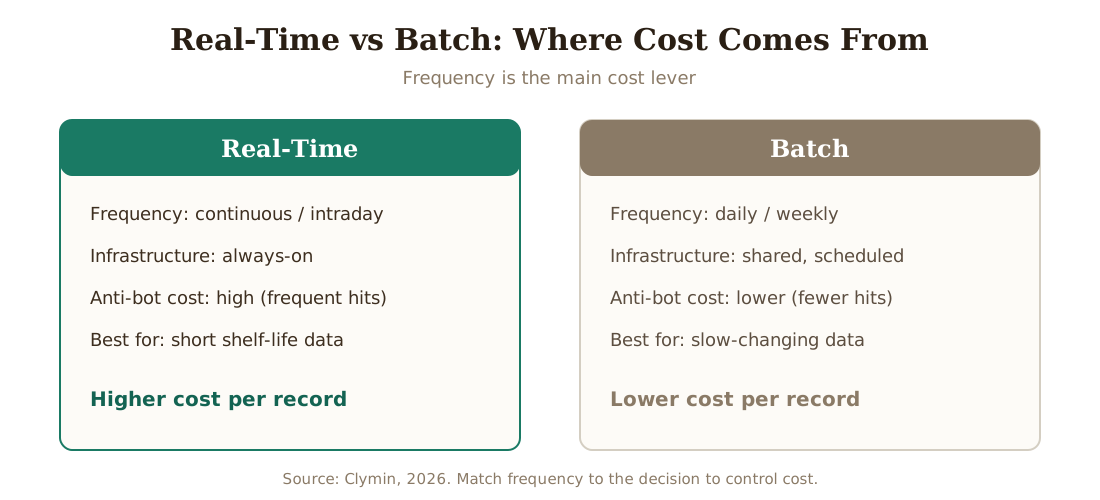 Frequency is the main cost lever: real-time re-checks sources far more often than batch, raising infrastructure and anti-bot cost.
What Real-Time Data Extraction Typically Costs in 2026
Real-time extraction is quoted in a few models: per-record delivered, per-request, or a monthly retainer tied to volume and frequency. Per-record pricing is the most transparent because it ties cost directly to output. As a rough guide, difficult real-time sources are priced well above simple daily pulls, and the gap widens with frequency and anti-bot intensity.
List prices mislead when they exclude the engineering to run and maintain a real-time pipeline. According to Grand View Research's 2024 analysis, the web scraping software market exceeded $1 billion in 2023 and is growing at a double-digit annual rate, reflecting how much of the true cost is ongoing engineering rather than tooling. A managed per-record price folds that work in. For the build-versus-buy math, see managed web scraping versus building in-house.
How Clymin Prices Real-Time Crawling
Clymin prices real-time crawling on one metric: cost per record delivered. There are no setup fees, no monthly platform fees, and no customization charges. Anti-bot handling, maintenance, and cleansing are all included, so the per-record rate is the whole cost.
That rate reflects the real drivers, frequency and source difficulty, rather than a headline subscription. Clymin runs a free pilot on your sources first, so the quote is based on your actual data rather than an estimate. For the full managed approach, see Clymin's main data extraction service.
How to Control Real-Time Extraction Costs
The fastest way to control cost is to match frequency to the decision. Audit which feeds truly need real-time and which can run hourly or daily, then reserve continuous collection for data with a genuinely short shelf life. Most teams find that only a fraction of their sources need true real-time.
Consolidating sources with one managed provider also lowers cost, because shared infrastructure and per-record pricing avoid paying for idle capacity. Clymin sizes each feed to its real cadence so you never pay real-time rates for data that changes slowly.
Ready to Get a Real-Time Data Quote?
Tell us your sources, frequency, and volume, and Clymin will run a free pilot and quote a per-record price on your real data before you commit. Email contact@clymin.com or start a free pilot, one metric, cost per record delivered, no setup fees.