
Why Scraping OTA Prices Matters for Hotels
Revenue managers at hotel groups face a persistent challenge: OTA platforms display rates that change multiple times per day based on demand, competitor pricing, and algorithmic adjustments. Manual rate checking across even five OTAs for a 200-room property means monitoring thousands of rate combinations daily.
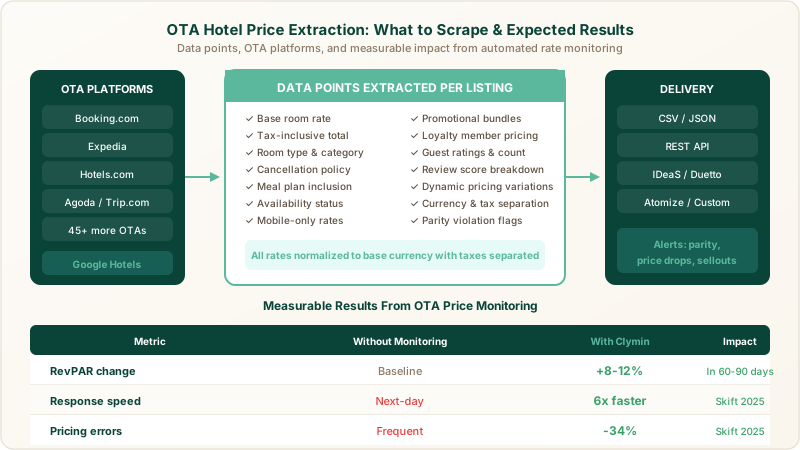
Phocuswright's 2025 Online Travel Market report found that 67% of hotel bookings in 2026 originate through OTA channels. Hotels that monitor OTA pricing systematically achieve 8-12% higher RevPAR compared to those relying on periodic manual checks.
Clymin's hotel rate scraping service automates the entire collection process, delivering clean rate data directly into revenue management systems.
What OTA Data Points Should You Extract?
Effective rate intelligence requires more than just room prices. Clymin extracts comprehensive data sets from each OTA listing including base room rates, tax-inclusive totals, cancellation policy terms, meal plan inclusions, loyalty member pricing, mobile-only rates, and promotional bundle pricing.
Room availability windows provide equally valuable intelligence. Knowing when competitors sell out specific room categories reveals demand patterns that inform your own inventory allocation and pricing strategy.
Guest review scores and review counts from OTAs offer competitive benchmarking data. A Deloitte 2025 Hospitality Analytics study found that properties within 0.3 rating points of competitors can command 5-7% higher rates when they highlight specific amenity advantages.
How Does Clymin Handle OTA Anti-Bot Protections?
OTA platforms deploy sophisticated anti-scraping measures including CAPTCHAs, JavaScript rendering requirements, IP blocking, and browser fingerprinting. Booking.com and Expedia update their protections weekly, breaking traditional scraping scripts within days.
Clymin's AI agents adapt to protection changes automatically. When an OTA modifies its page structure or adds new verification steps, Clymin's agents detect the change and adjust their extraction approach without manual intervention.
Rate limiting represents another critical consideration. Aggressive scraping triggers blocks that can last weeks. Clymin distributes requests across residential IP pools and mimics natural browsing patterns to maintain continuous access without triggering platform defenses.
Step-by-Step: Building an OTA Price Monitoring Workflow
Step 1, Define your competitive set. Identify 10-15 competitor properties per market. Clymin configures monitoring for each property across every OTA where rates appear.
Step 2, Set extraction frequency. Hourly monitoring suits high-demand urban markets. Daily extractions work for resort properties with longer booking windows. Clymin adjusts frequency based on rate volatility patterns.
Step 3, Structure the output format. Clymin delivers data as normalized CSV, JSON, or direct API feeds compatible with revenue management systems including IDeaS, Duetto, and Atomize.
Step 4, Configure alerts. Rate parity violations, competitor price drops exceeding 10%, and sudden availability changes trigger immediate notifications to revenue managers.
Clymin handles steps 1 through 4 as a fully managed service. Learn more about automated rate monitoring for ongoing competitive intelligence.
Common OTA Scraping Challenges and Solutions
Dynamic rendering causes most DIY scraping projects to fail. OTA platforms load pricing through JavaScript after the initial page load. Clymin's headless browser agents execute all JavaScript and wait for rate data to fully render before extraction.
Rate parity discrepancies across OTAs require careful handling. The same room at the same property may show different prices on Booking.com versus Expedia due to commission structures and promotional agreements. Clymin normalizes rates to enable true apples-to-apples comparison.
Currency and tax variations complicate cross-market analysis. Clymin converts all extracted rates to your base currency and separates taxes and fees to produce comparable net rate figures.
A Skift Research 2025 report estimated that hotels using automated rate intelligence tools reduce pricing errors by 34% and respond to competitor rate changes 6x faster than manual monitoring teams.
What Results Can Hotels Expect From OTA Price Monitoring?
Hotels implementing systematic OTA price monitoring through Clymin typically see measurable RevPAR improvements within 60-90 days. Competitive rate awareness enables revenue managers to identify pricing opportunities, moments when competitors raise rates or sell out, creating windows for strategic rate adjustments.
Rate parity monitoring alone delivers significant value. OTA contract violations where platforms undercut agreed rates cost hotel groups an estimated $2.4 billion annually according to the Hotel Distribution Report 2025. Automated detection catches violations within hours rather than days.
Clymin's managed approach eliminates the engineering overhead of maintaining scraping infrastructure. Revenue teams receive clean, actionable travel data without hiring developers or managing proxy networks.
Get Started With OTA Price Scraping
Clymin configures a complete OTA monitoring pipeline within 5 business days for most hotel groups. Contact the team at contact@clymin.com or book a meeting to discuss your competitive set and monitoring requirements.